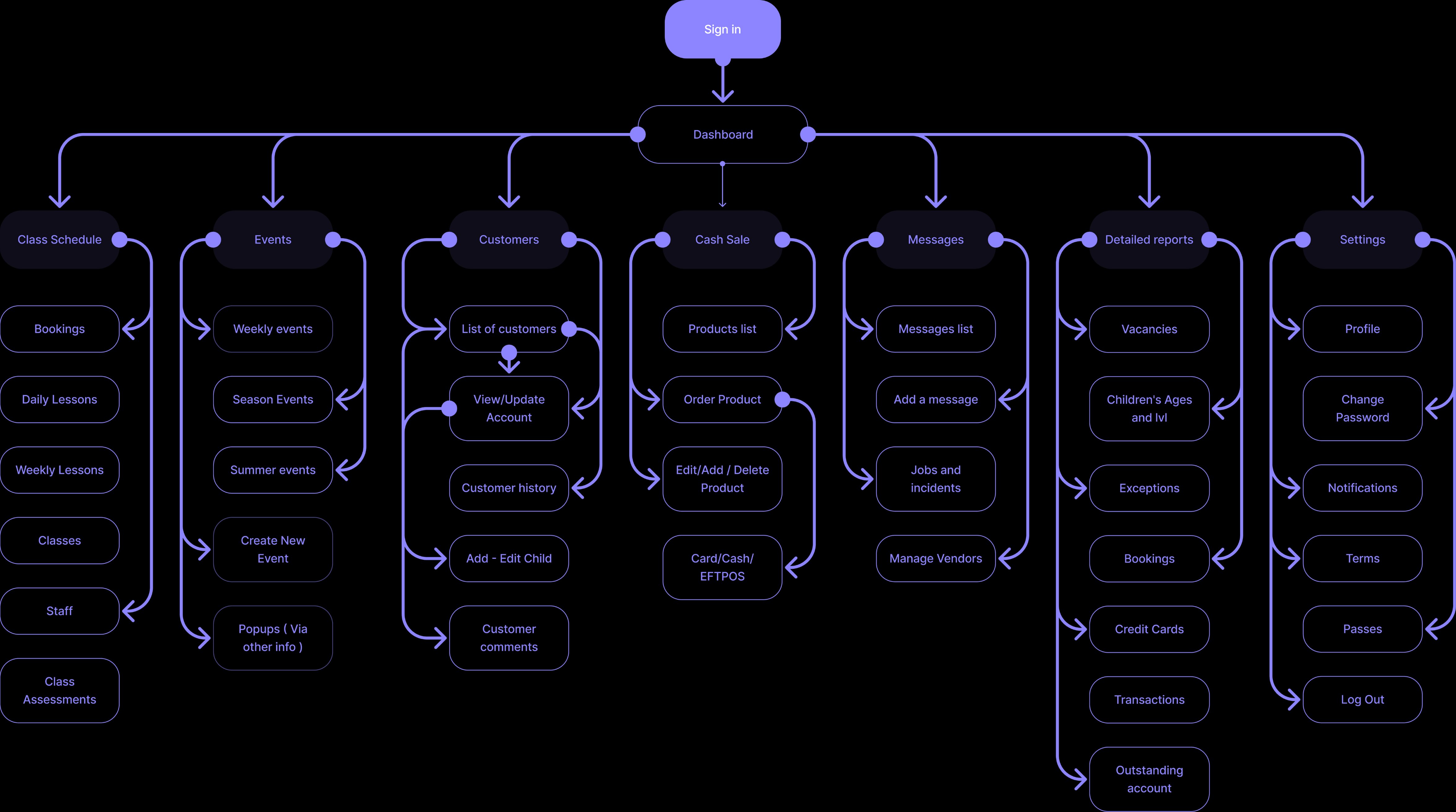
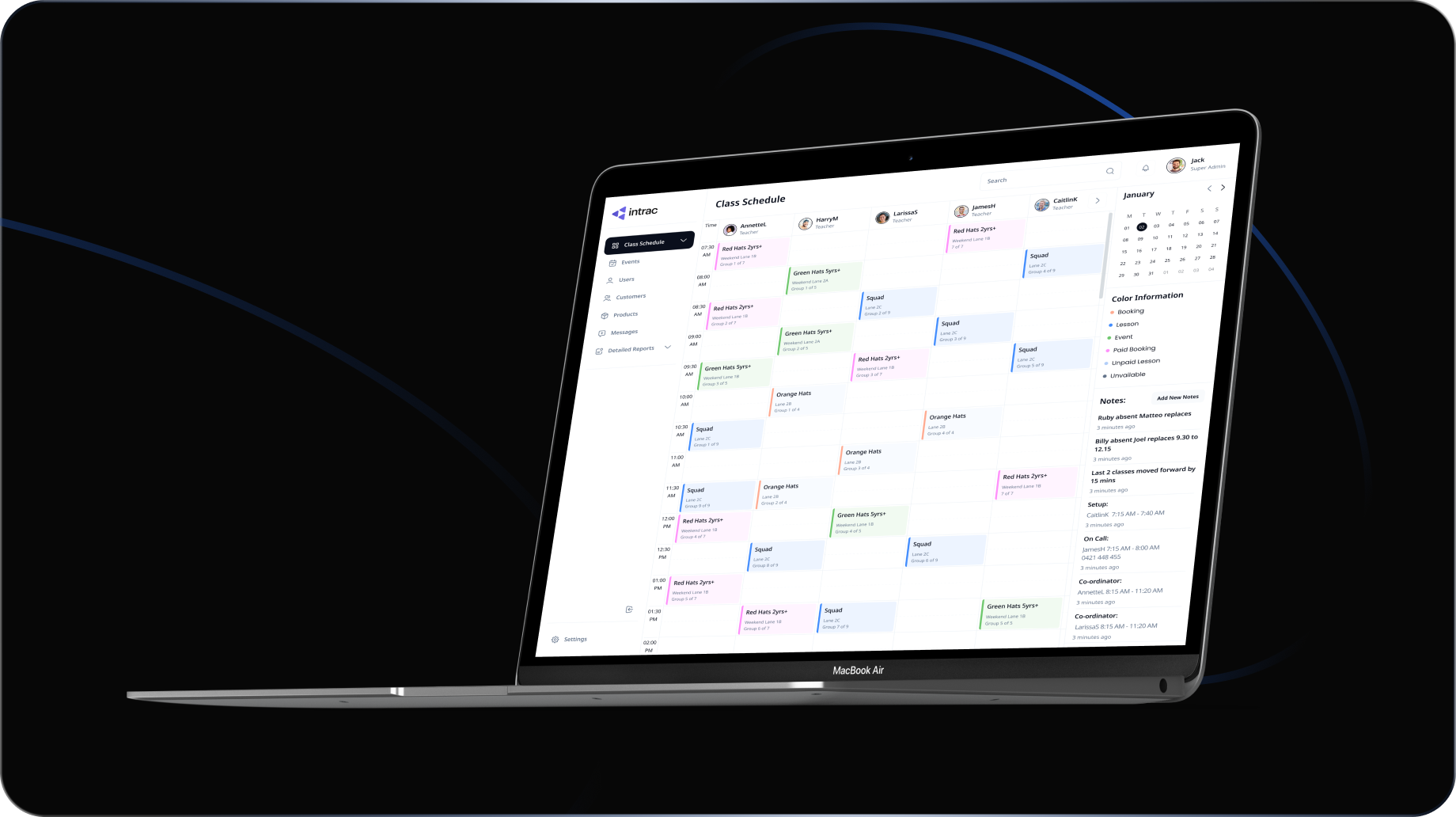
A scheduling and management platform for sports facilities — built for admins running the operation and coaches checking their timetable. The existing design had launched but wasn't usable — rebuilt from scratch in 4 months.
The existing operation had real problems that were holding the business back. Staff were overwhelmed with administration work. Customers had to queue up to renew enrolments before the start of each term.
Records were not kept reliably, and classes were occasionally overbooked. Communication with clients was slow and difficult, and records were only accessible from the office — impossible to reach remotely.
As the business grew, the cost of administration kept increasing. More staff were needed just to manage the paperwork. The brief was clear: replace a broken manual process with a platform that could scale.
I worked remotely with the client through regular calls — that was the main channel for everything: context, priorities, feedback, decisions.
Without analytics or direct access to users, I relied on what the client knew about the product: which flows users complained about, which features were used most, what the next milestone needed to unlock. Each call ended with a clearer scope for the next iteration, and each iteration came back for review before moving forward.
It wasn't the fastest setup, but it kept the work aligned with what the team actually needed — no designs built in isolation, no surprises at handoff.
Admins use this product every day. The UI had to reduce cognitive load, not add to it. The class schedule view — the most complex screen — organises coaches, time slots, locations, and attendance into a single scannable grid.
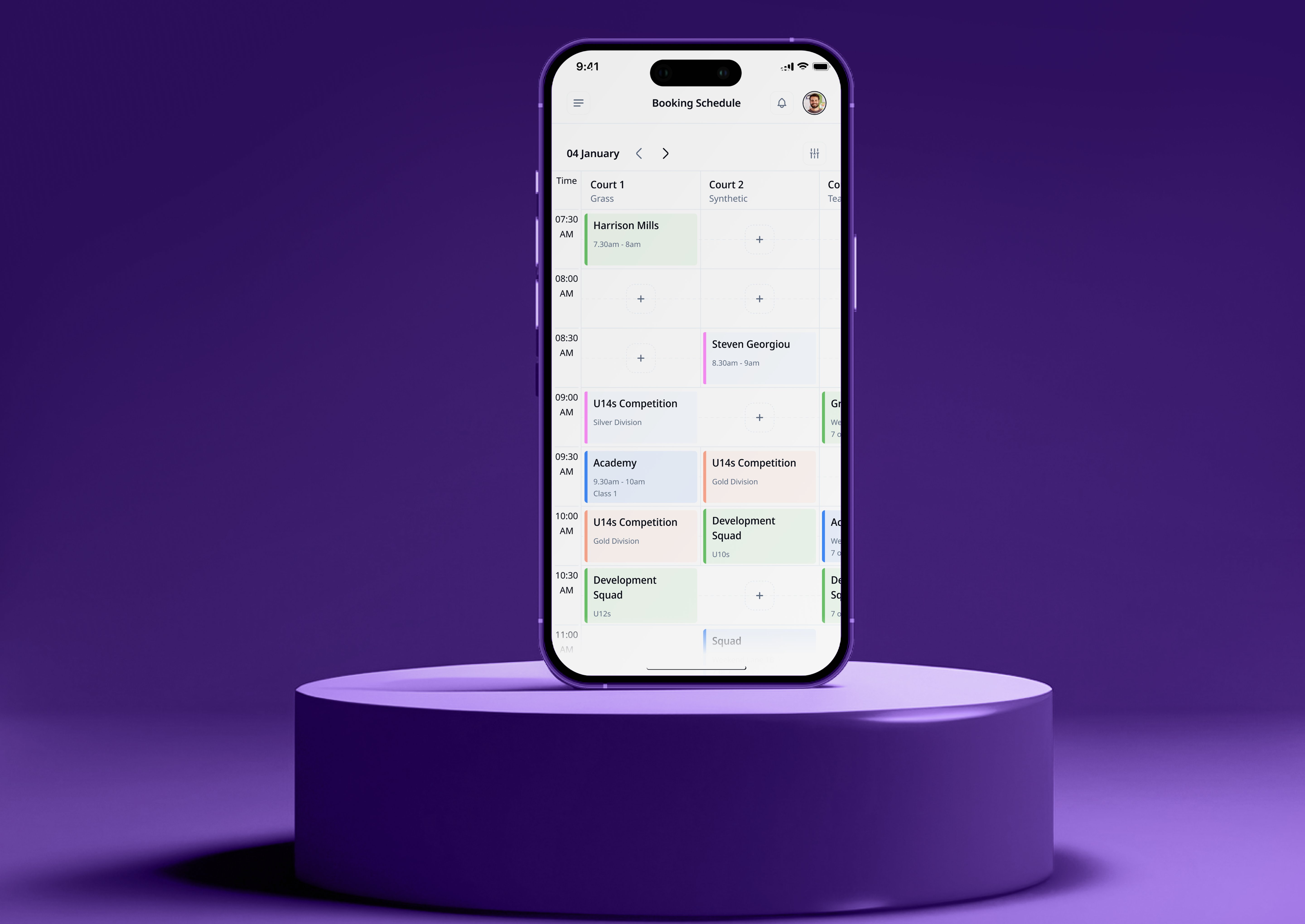
The coach calendar was a new feature added during the project. Coaches had no dedicated view before — they navigated the same dense admin grid. I designed a purpose-built calendar: time-based, location-labelled, with one-tap attendance marking.
The platform replaced a manual, paper-based operation with a single system that the whole team now runs on.
Customer database, enrolments, accounts and payroll all live in one place. Rolling over enrolments — previously a major administrative task — is now handled automatically. Customers receive enrolment notices and instructions without staff involvement.
Most enrolments and payments are now completed online by customers themselves. Staff no longer manage communication through email — it happens inside the system. Make-up lessons are self-booked by customers online. Key reports like enrolment numbers and vacancies are available instantly, with current data.