Home
Valentyn.cv LinkedIn Email Dribbble
Loop
Product design Design system Web

One workspace for every tool your team already uses

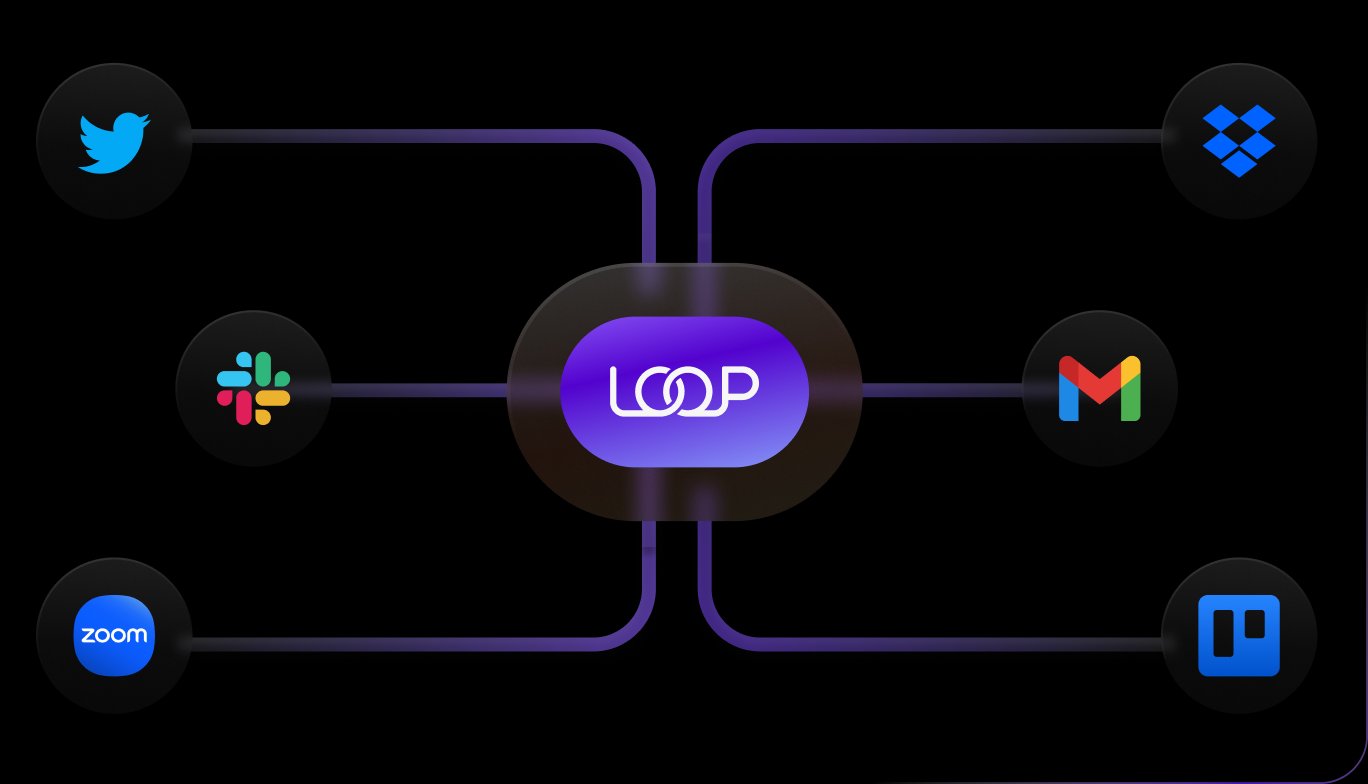
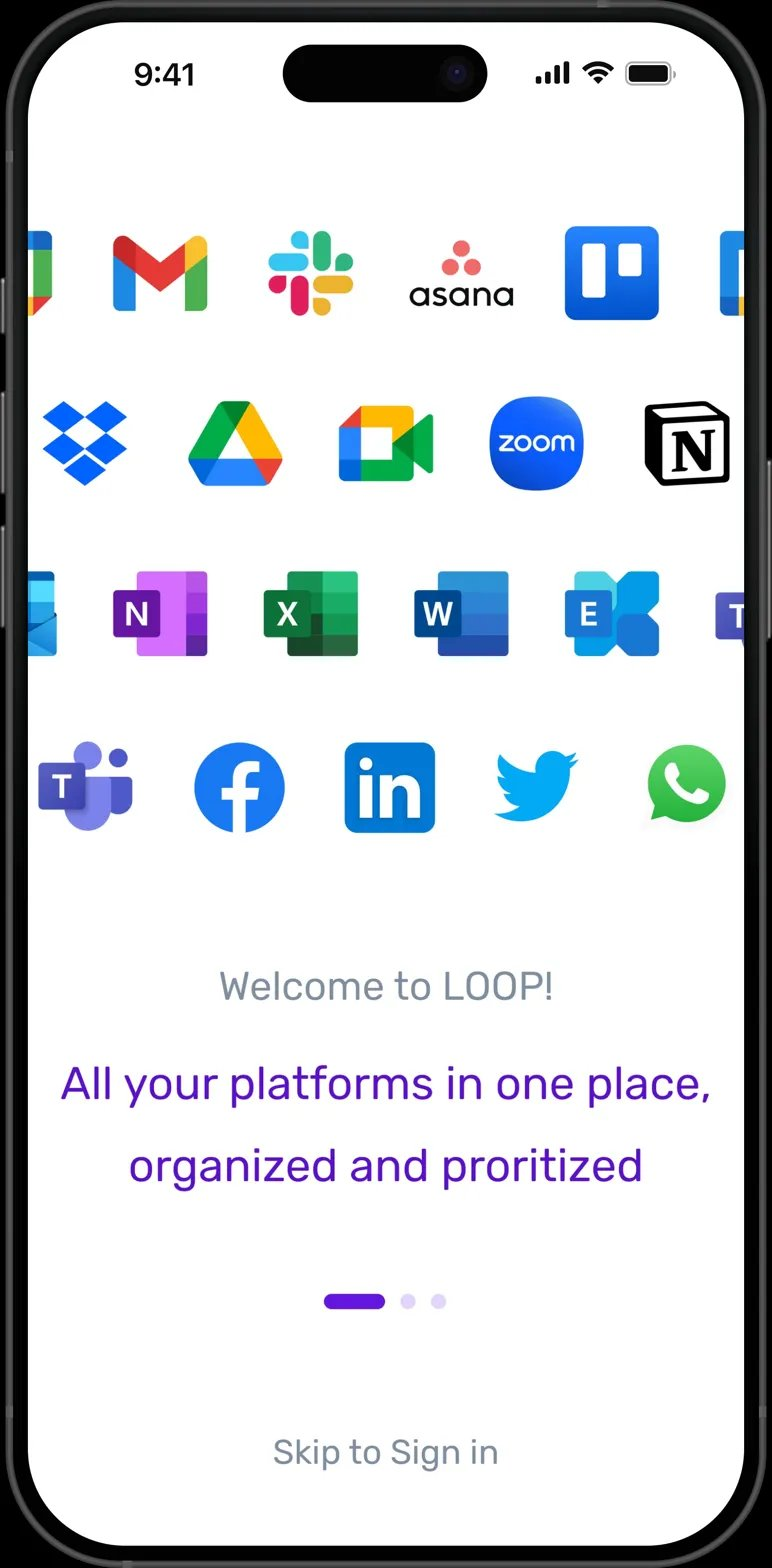
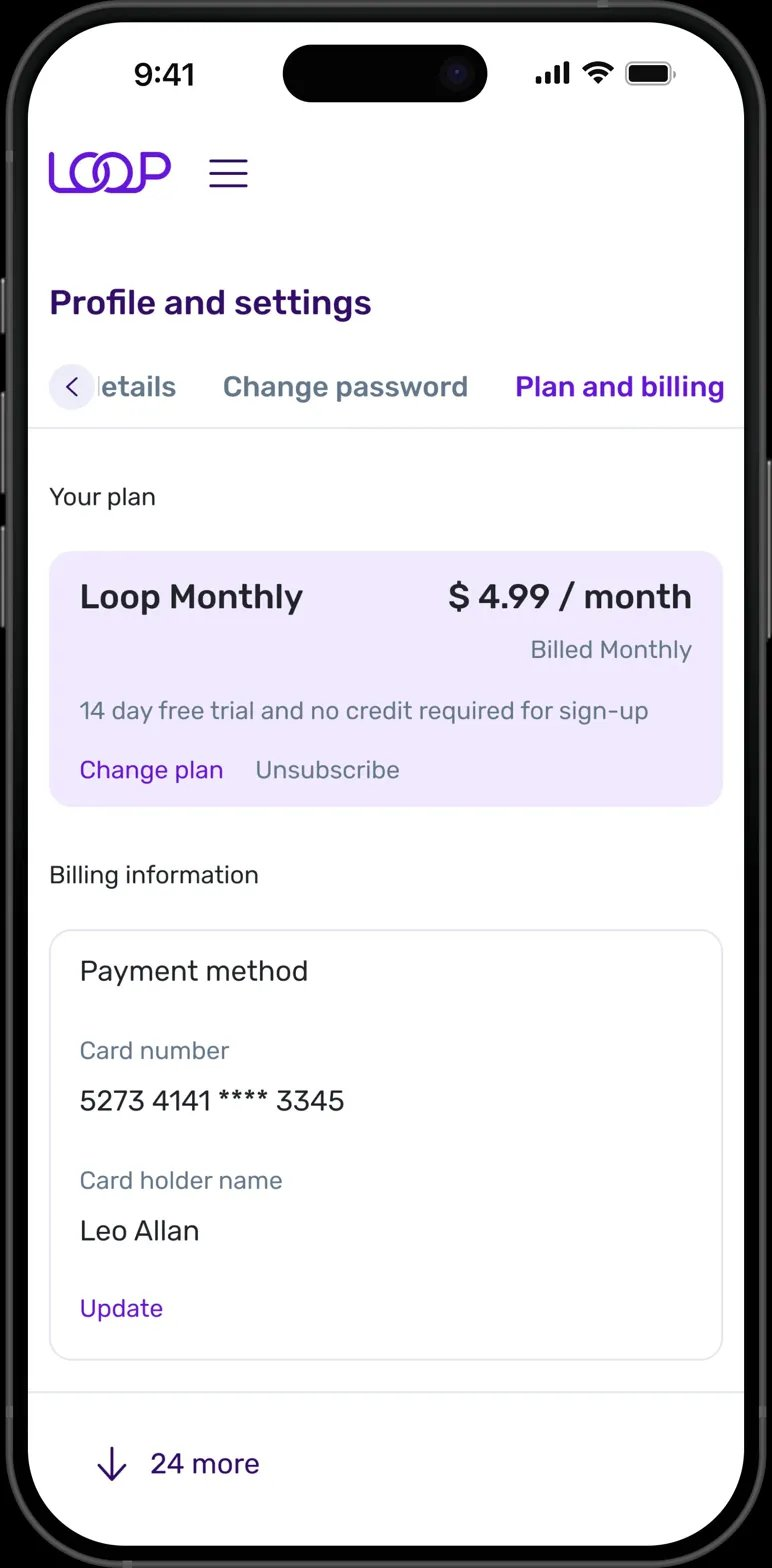
Loop was a 0→1 product — no existing design, no users yet, no analytics. The idea: bring Slack, Notion, Asana, Trello, Gmail, Zoom, WhatsApp and more into one workspace so teams stop switching tabs to get work done. My job was to design that from a blank canvas.
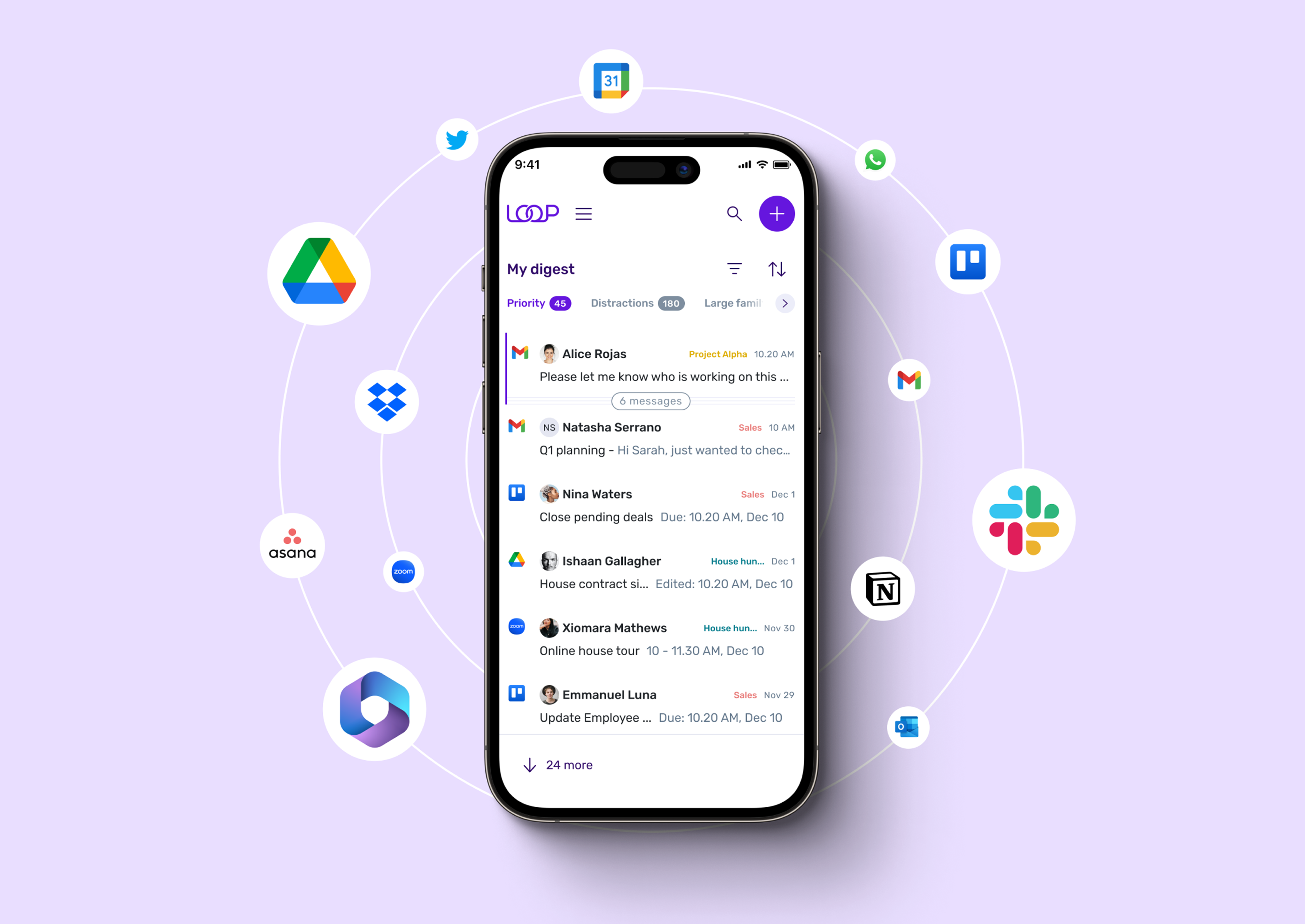
Loop product overview — mobile app surrounded by integrated tools

Overview

Role UX/UI Designer
Team 2 designers, 3 engineers
Timeline 6 months
Platform Web
My Focus Research & integrations, Design system, Onboarding
Tools Figma, FigJam

The Challenge

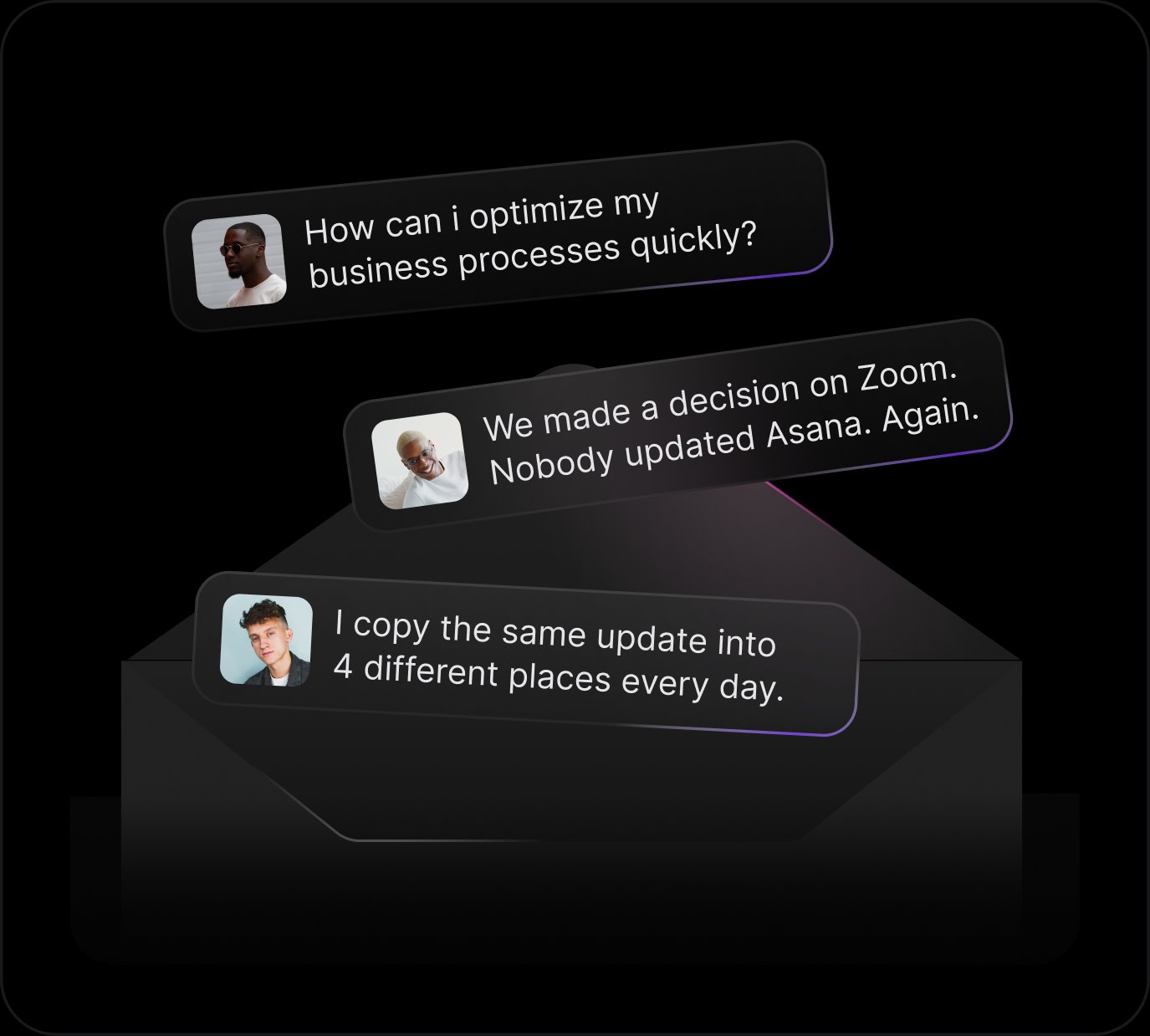
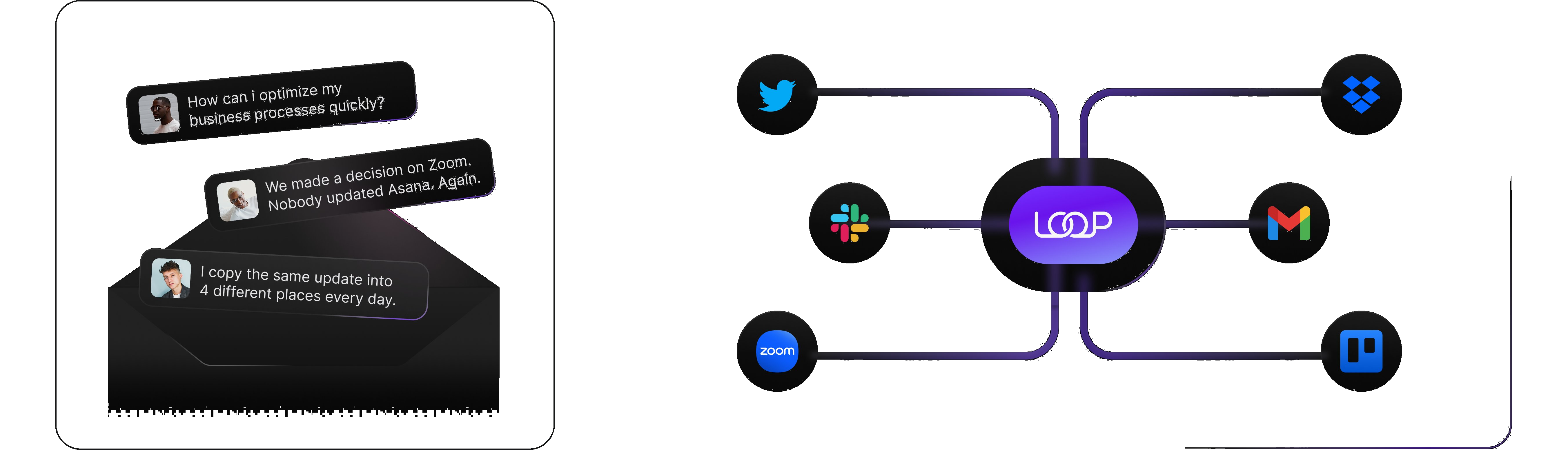
People already have their tools. The problem isn't adding another one — it's that switching between Slack, Asana, Zoom, and five others fragments attention and buries context. Loop's goal was to make that switching disappear.

Challenge — Loop solution
Fragmented tools Loop solution

Approach

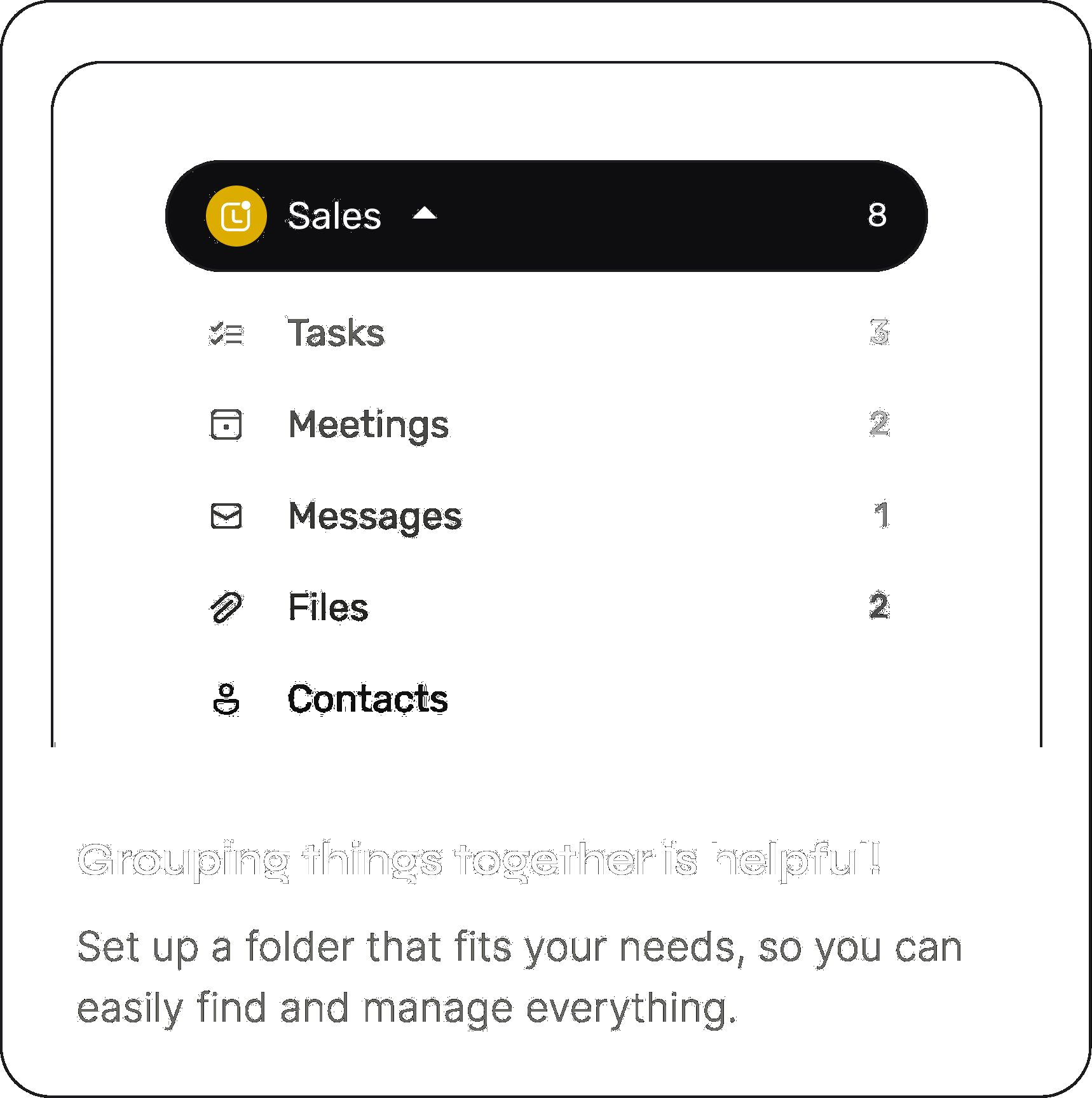
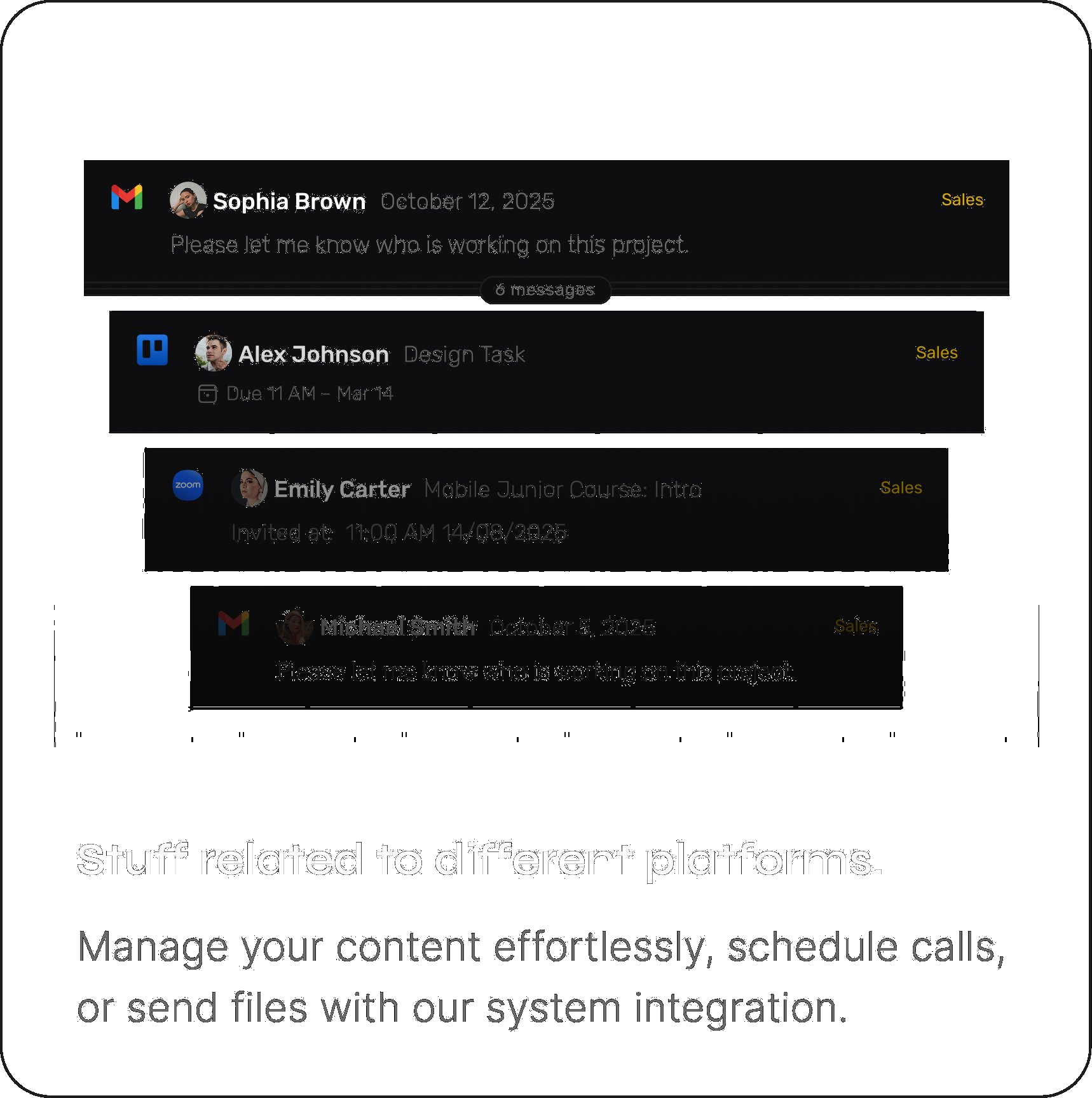
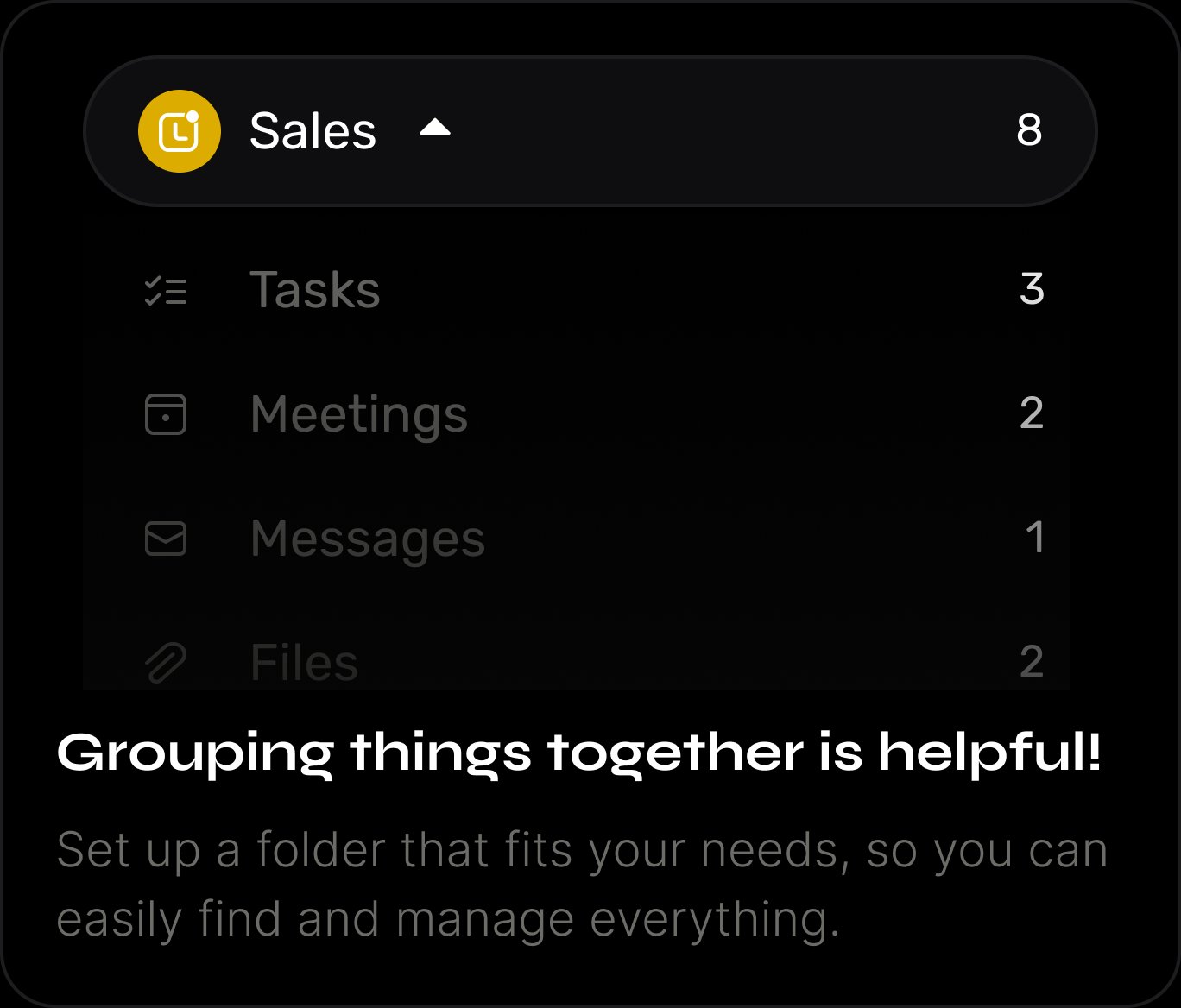
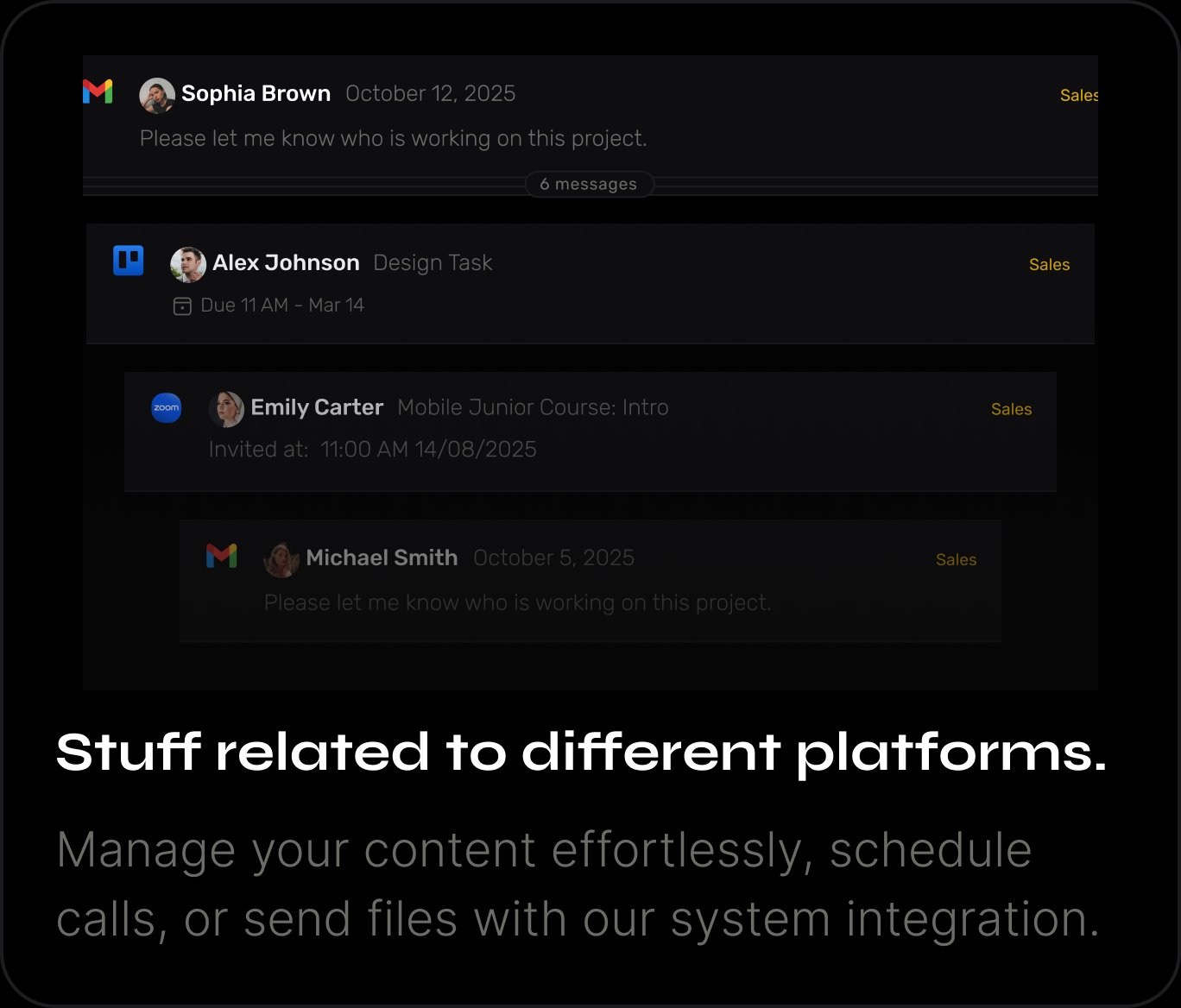
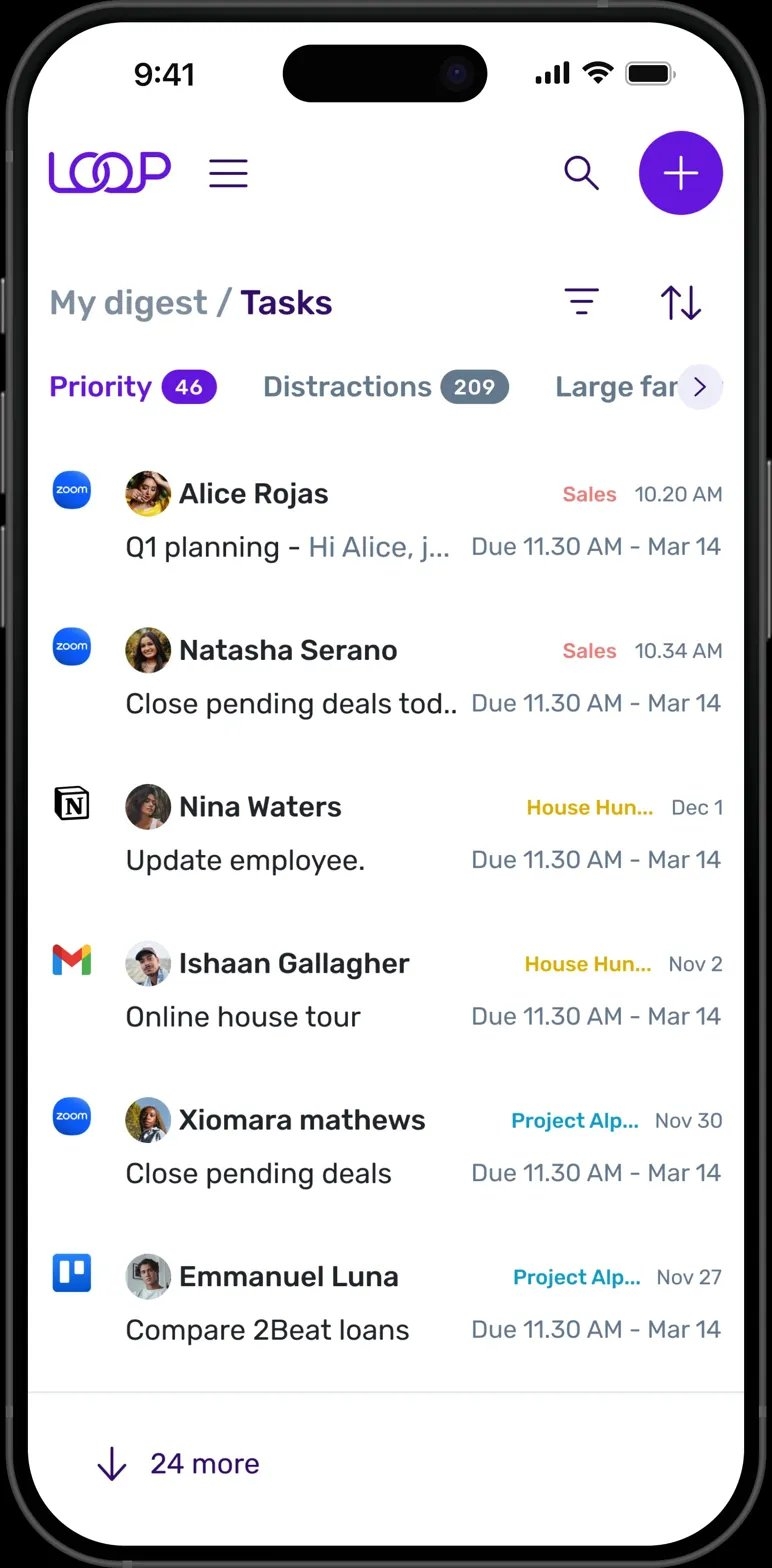
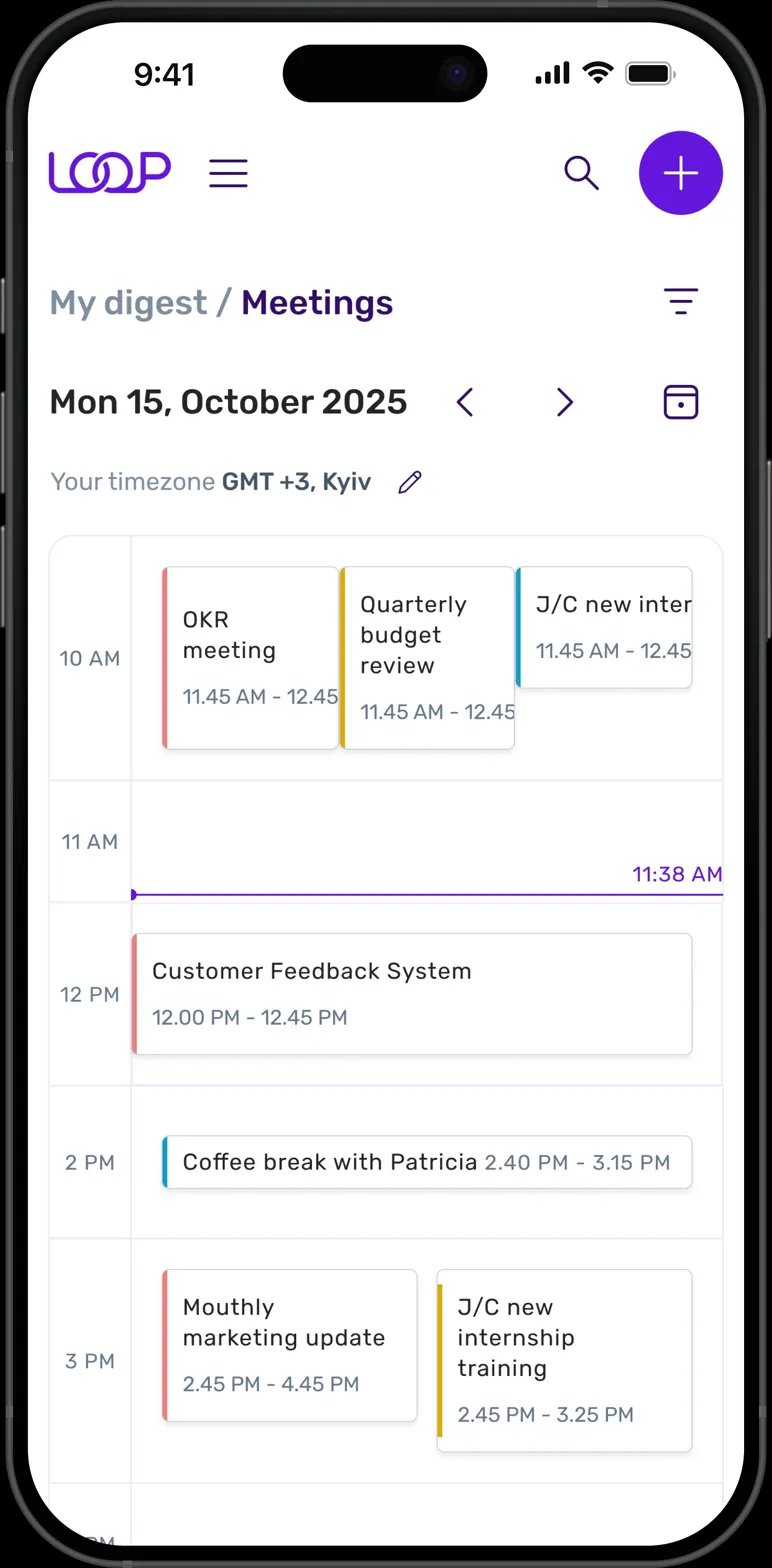
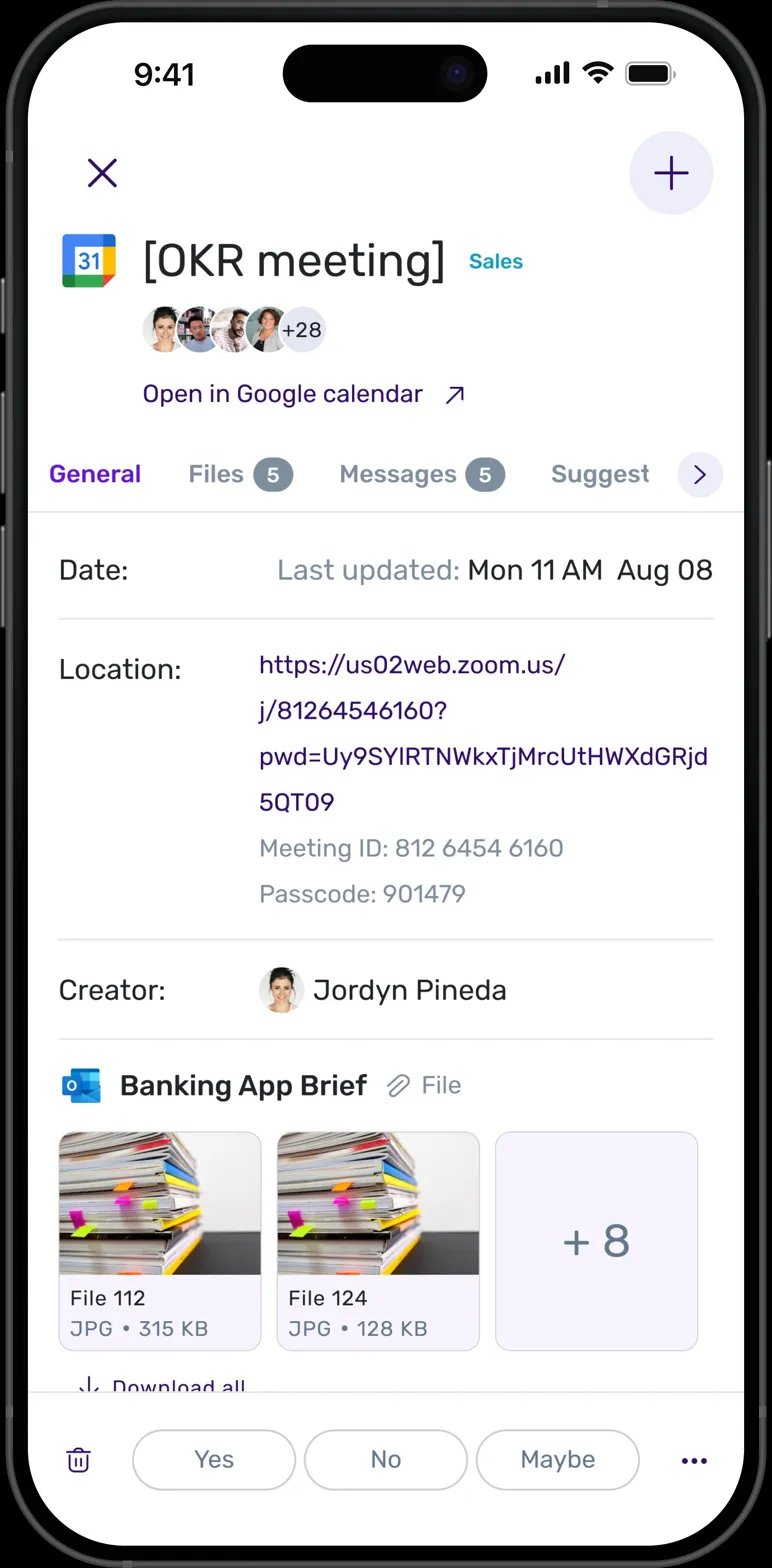
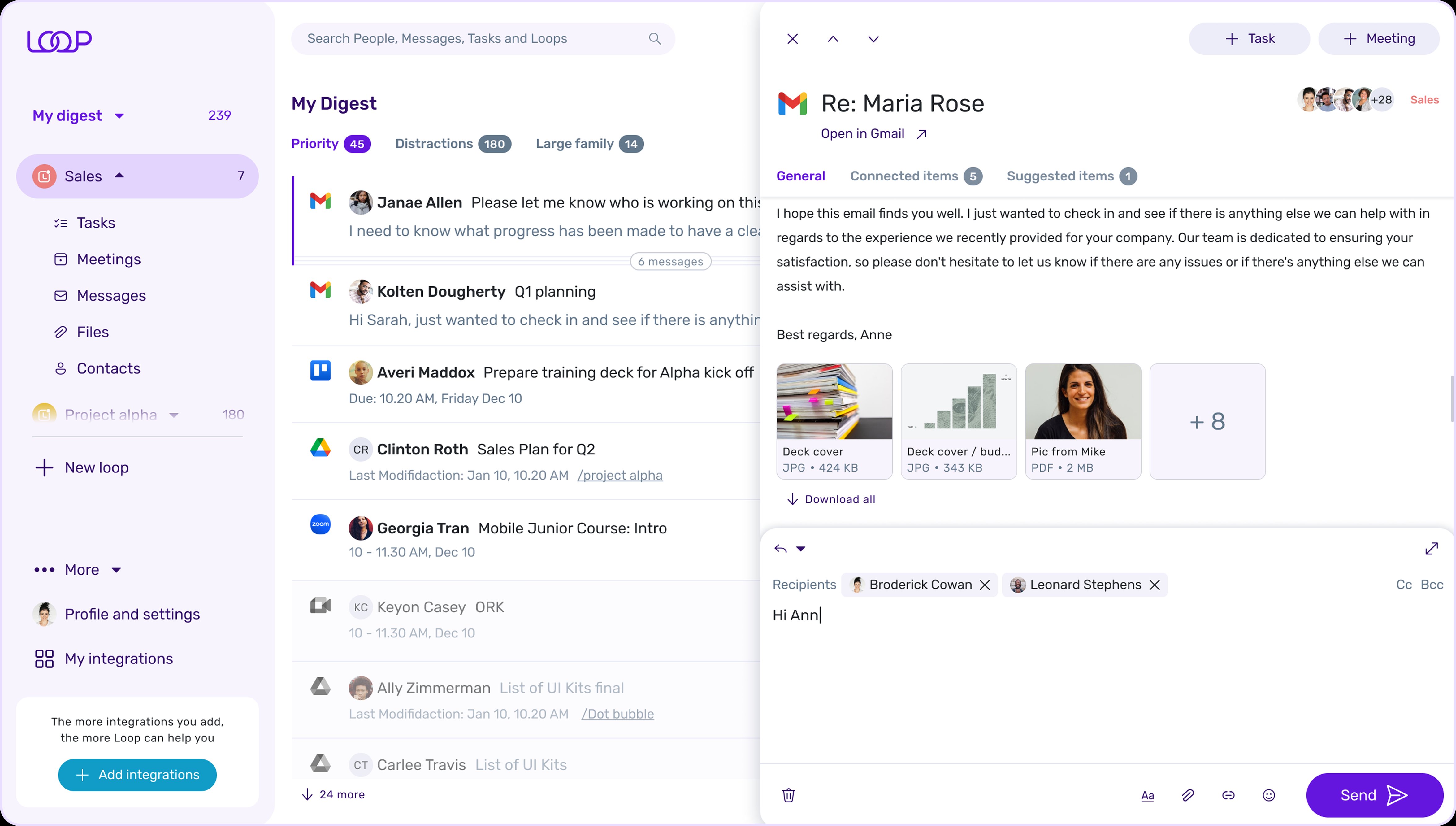
The risk with aggregation is that you just move the chaos, not solve it. To avoid that, I introduced Loops — containers organized by project, not by tool. Everything related to one context lives in one place. Navigation becomes obvious because the structure mirrors how people actually work.

Grouping
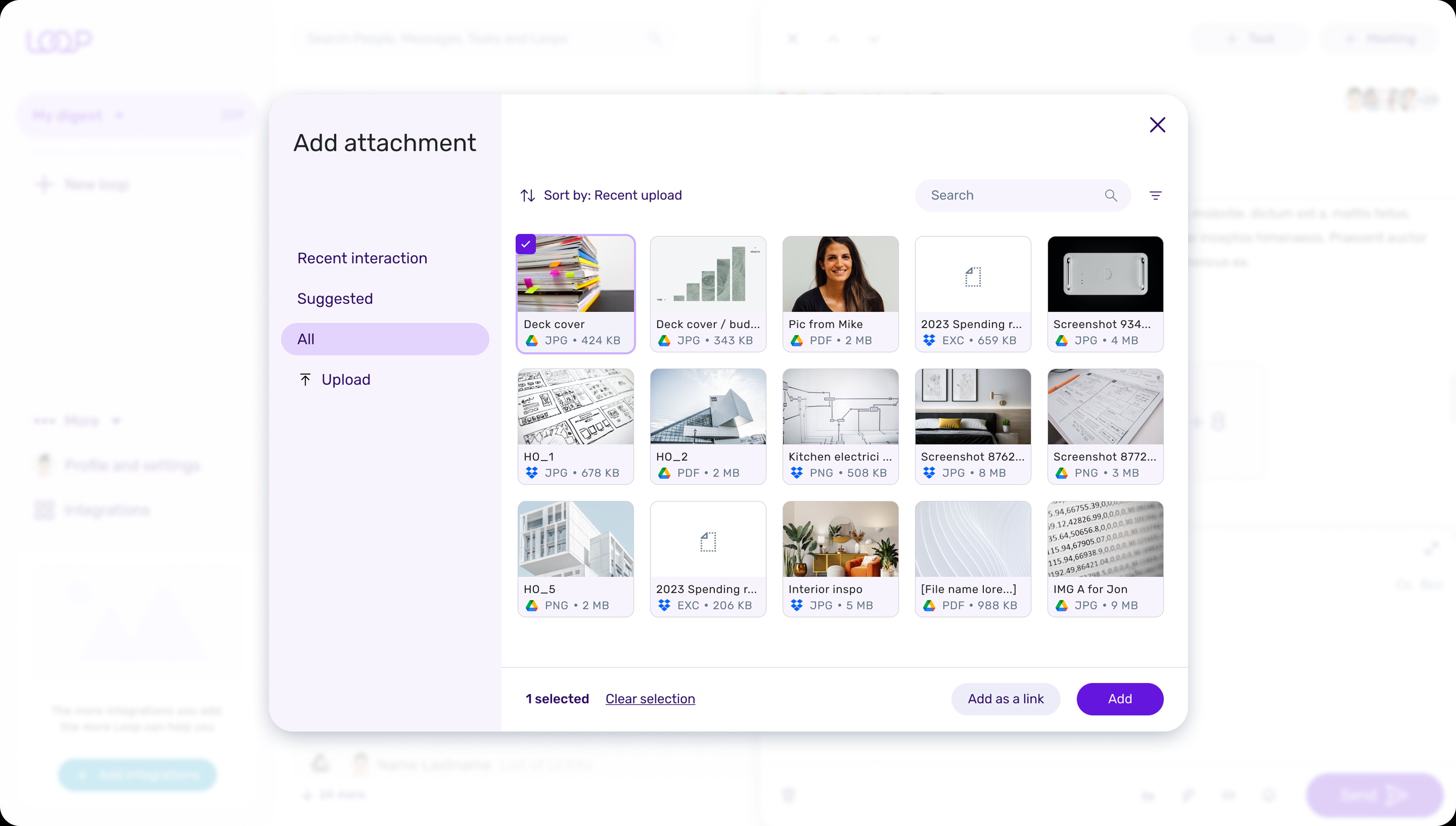
Content related to platforms
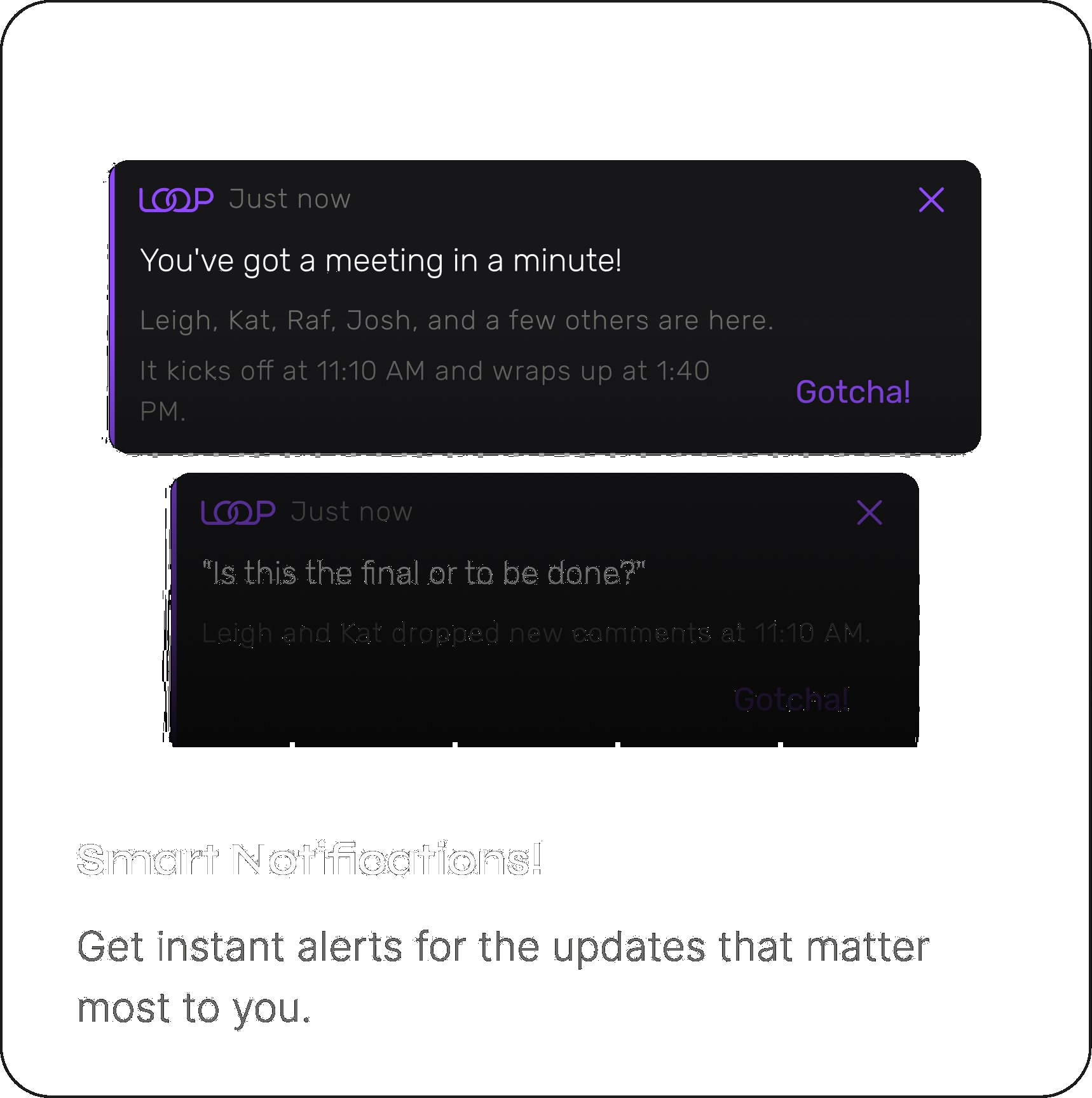
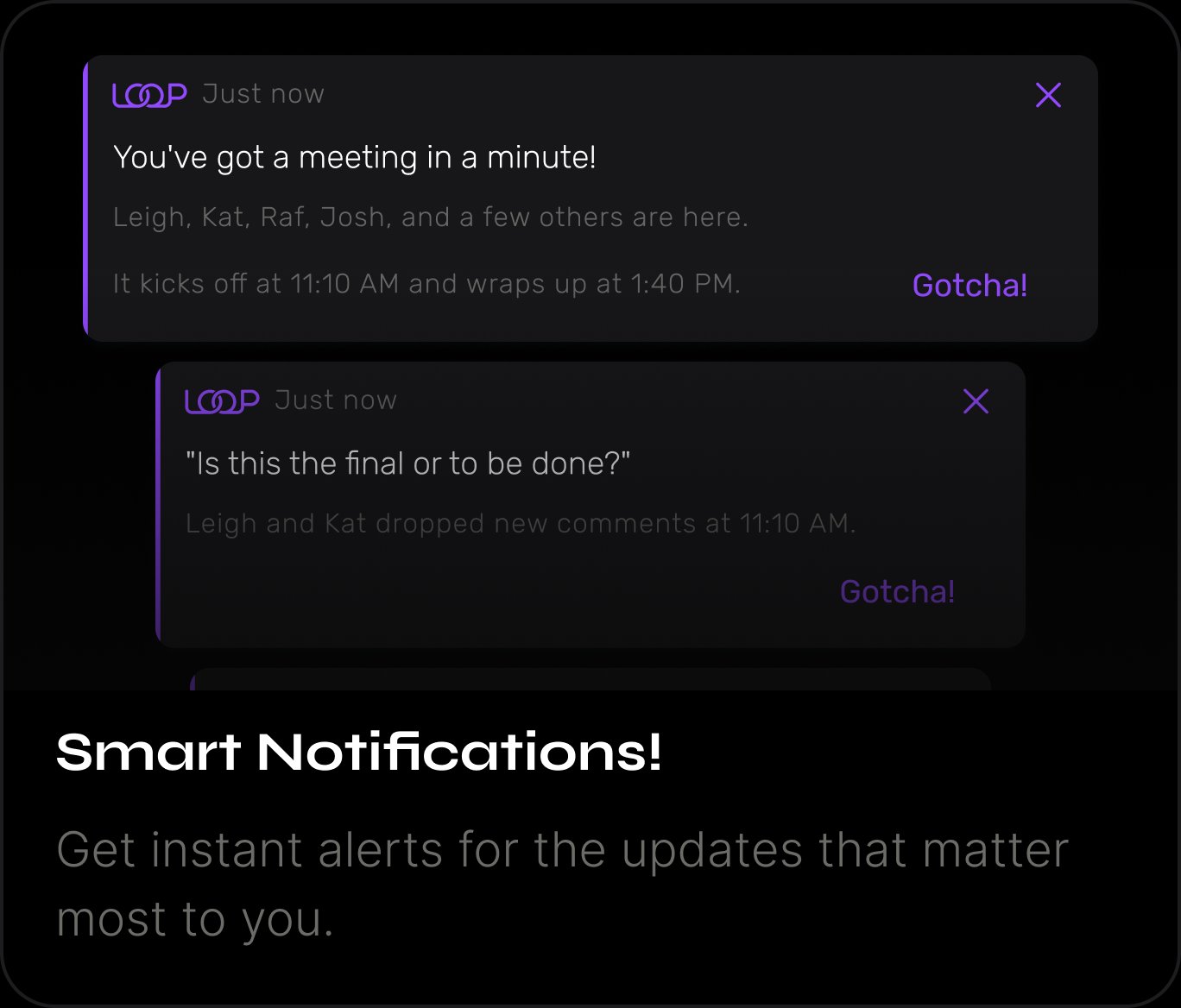
Smart Notifications
Grouping Content related to platforms Smart Notifications

Onboarding

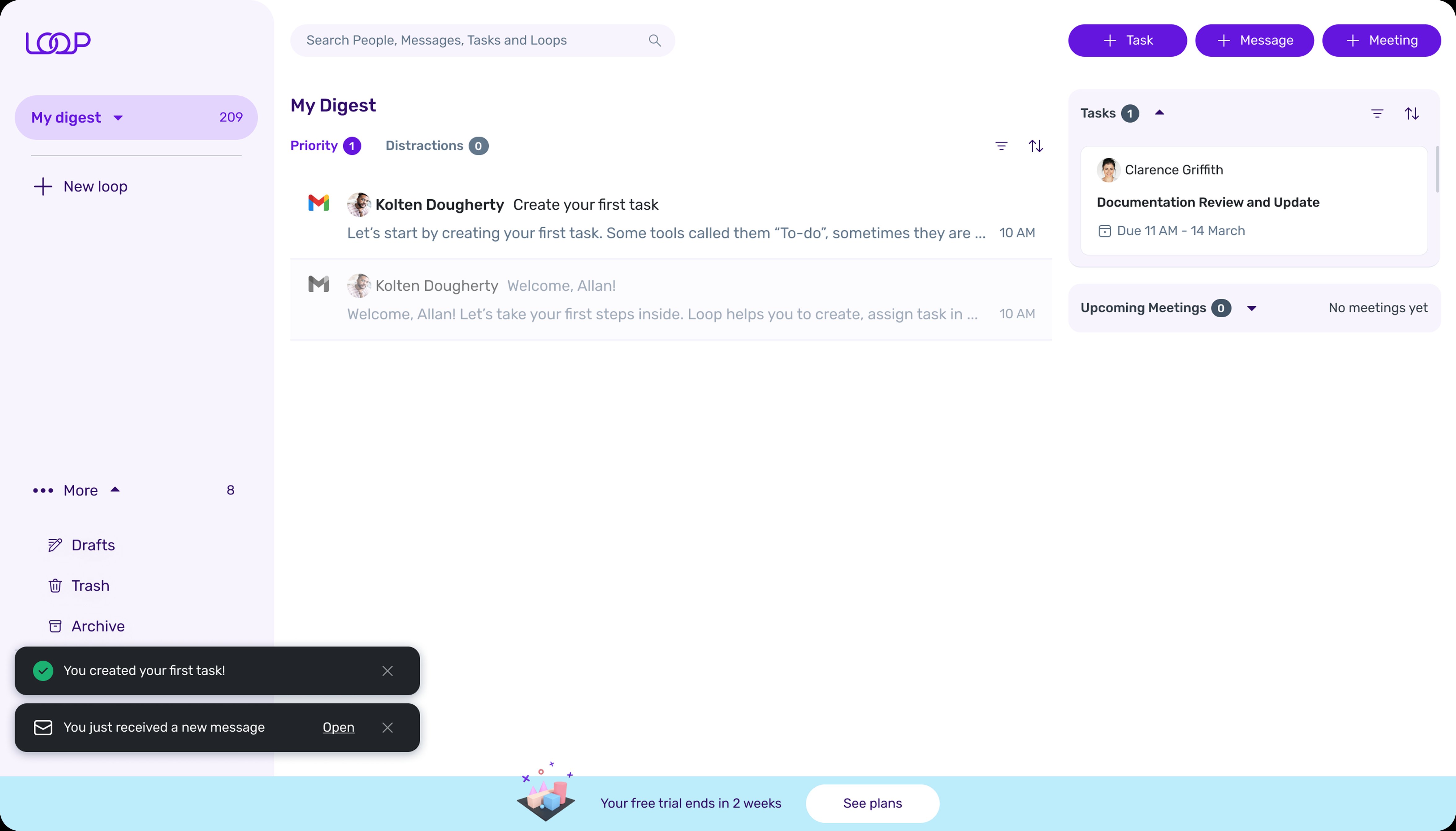
Proposed and led — I flagged a missing piece in the UX and explored three directions. One gave new users enough context to take their first action without guessing.

No onboarding
Drop users directly into the workspace. Works for power users who explore independently.
Most users land in a full-featured product with 12+ integrations and no idea where to start.
Product overview
A short intro explaining what Loop is at a high level. Awareness without action.
Tells users about the product but doesn't help them use it. Doesn't close the gap to first action.
Guided walkthrough
Chosen
Step-by-step guide through the product — what each section does, where integrations live.
By the end, users have enough context to take their first action without guessing. My initiative — proposed and approved.

Outcome

The decisions I made early — how content is structured, how navigation works, how onboarding guides a new user — are still the foundation the engineering team builds on today.

Onboarding step 1 Onboarding step 2 Onboarding step 3