Home
Valentyn.cv LinkedIn Email Dribbble
Neobank
Mobile-first design UI Kit & Design system

Private banking for global clients, built for mobile

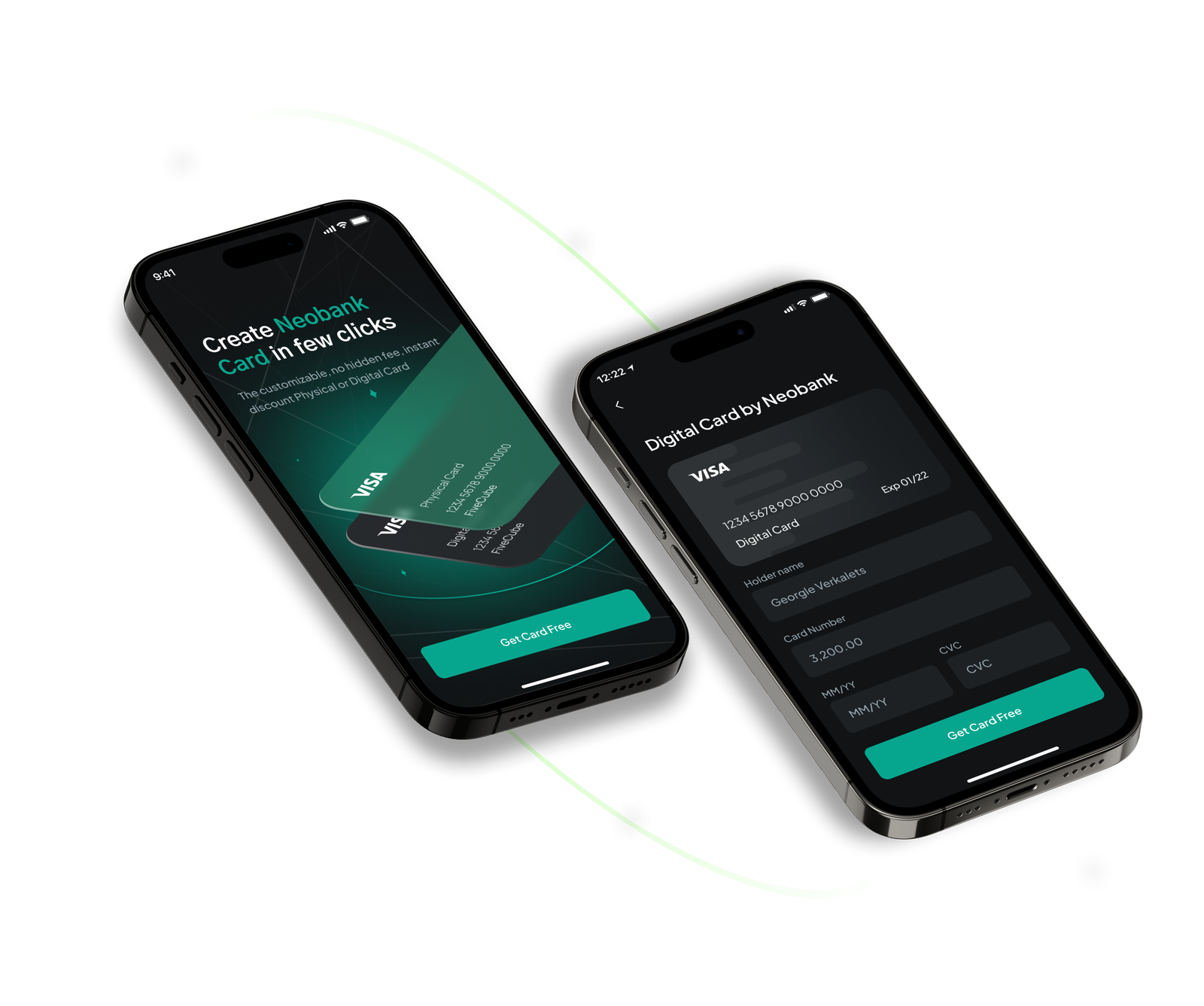
An invitation-only private wealth platform — international payments, multi-currency accounts, and wealth management in one iOS app for private clients. No existing product, no legacy patterns — I designed everything from scratch.
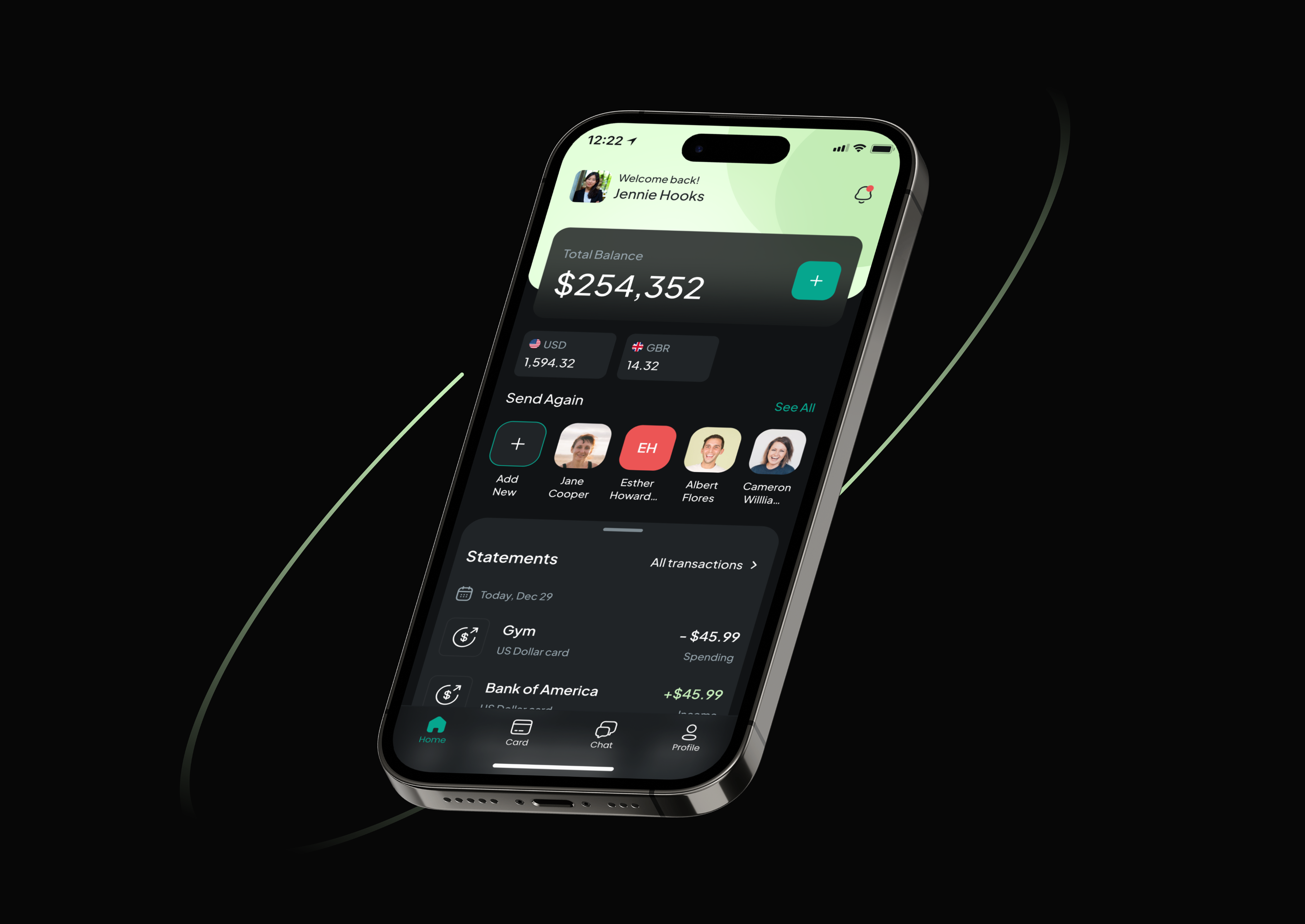
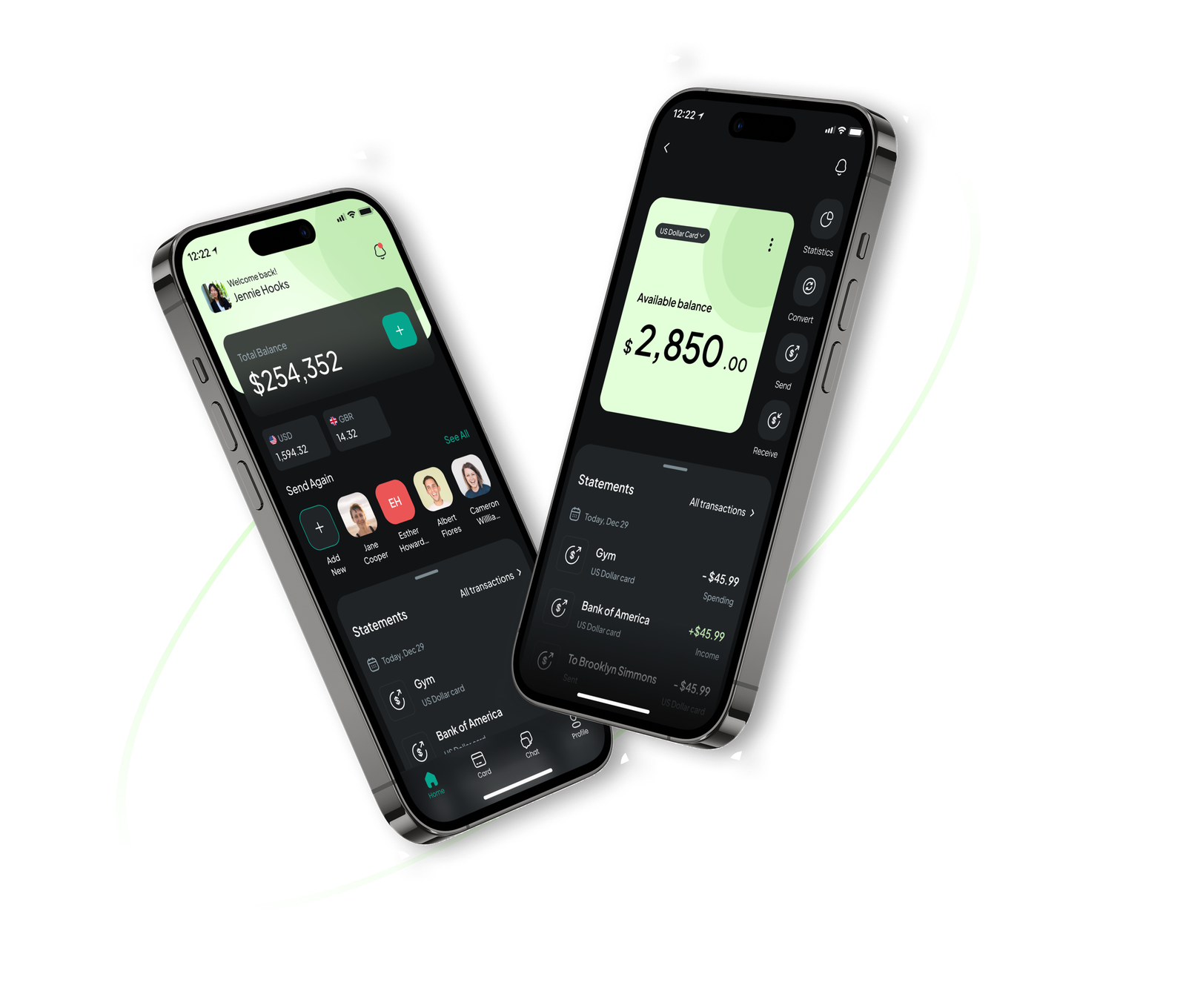
Neobank app — mobile dashboard with balance and quick actions

Overview

Role UX/UI Designer
Team Solo designer + client team
Timeline 3 months
Platform iOS
My Focus CJM, Wireframes, Design system, UI Kit, Visual identity
Tools Figma, FigJam

The Challenge

A private wealth platform from scratch — no existing product, no design to inherit, no analytics. The client had a vision; my job was to turn it into something a user could actually navigate.

Working solo meant owning every decision: how the flows connect, where actions live, what a user sees first. I grounded those decisions in competitive analysis — studying how leading banking and wealth apps structure their core flows — and used that to back every structural decision in client review.

The standard for a financial product is high. Every screen has to feel calm and trustworthy before a user has any reason to trust it. That's not a visual problem — it's a logic problem. Get the flow right, and the UI has something solid to sit on.

Idea & Goals Research Wireframes UI Design

Approach

Before any wireframes, I mapped the full customer journey solo — every touchpoint, every decision point a user hits moving through the product. The CJM went to the client for review and sign-off before a single wireframe was started.

That order was deliberate. Wireframes built on an unreviewed flow create expensive rework later. Getting the journey agreed first meant wireframes could focus on structure, not re-debating logic.

Flows were wireframed in priority order — core actions first, edge cases after. Each set went back to the client before moving forward.

Marcus
31 · Digital marketing manager
I have three cards in different currencies and still don't know my total balance.
CorporateTravels for workMulti-currency
Goals
See total balance across all accounts in one place
Convert currency quickly without extra steps
Understand where he spends the most each month
Pain points
Opens three apps just to check his balance
Loses money on bad exchange rates when in a rush
No clear financial picture due to scattered accounts
Sofia
27 · Junior investor
I want to start investing but don't know where to begin or how much I can afford.
Beginner investorGrowth focusedStable income
Goals
Track investment portfolio next to daily balance
Know how much she can safely invest each month
See portfolio growth in one simple interface
Pain points
Finances and investments live in separate apps
Afraid to over-invest and lose her safety cushion
Complex analytics feels overwhelming and unclear
Daniel
38 · Small business owner
I spend half an hour transferring salaries and I'm still doing it manually.
EntrepreneurTeam paymentsB2B
Goals
Pay contractors in one click without manual transfers
Keep business and personal finances fully separate
Get a clear monthly report for his accountant
Pain points
Every transfer is a separate manual operation
Mixes personal and business expenses constantly
No idea if the business is profitable or just running
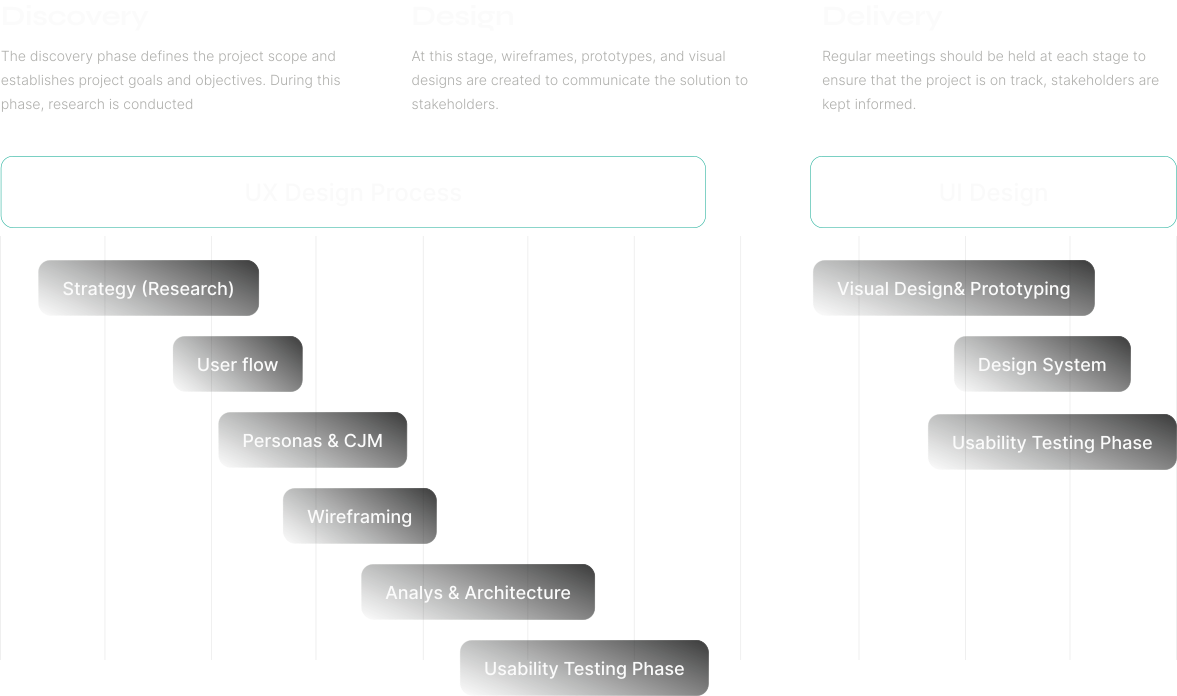
UX Design Process — Discovery, Design, Delivery phases with deliverables

Wireframes

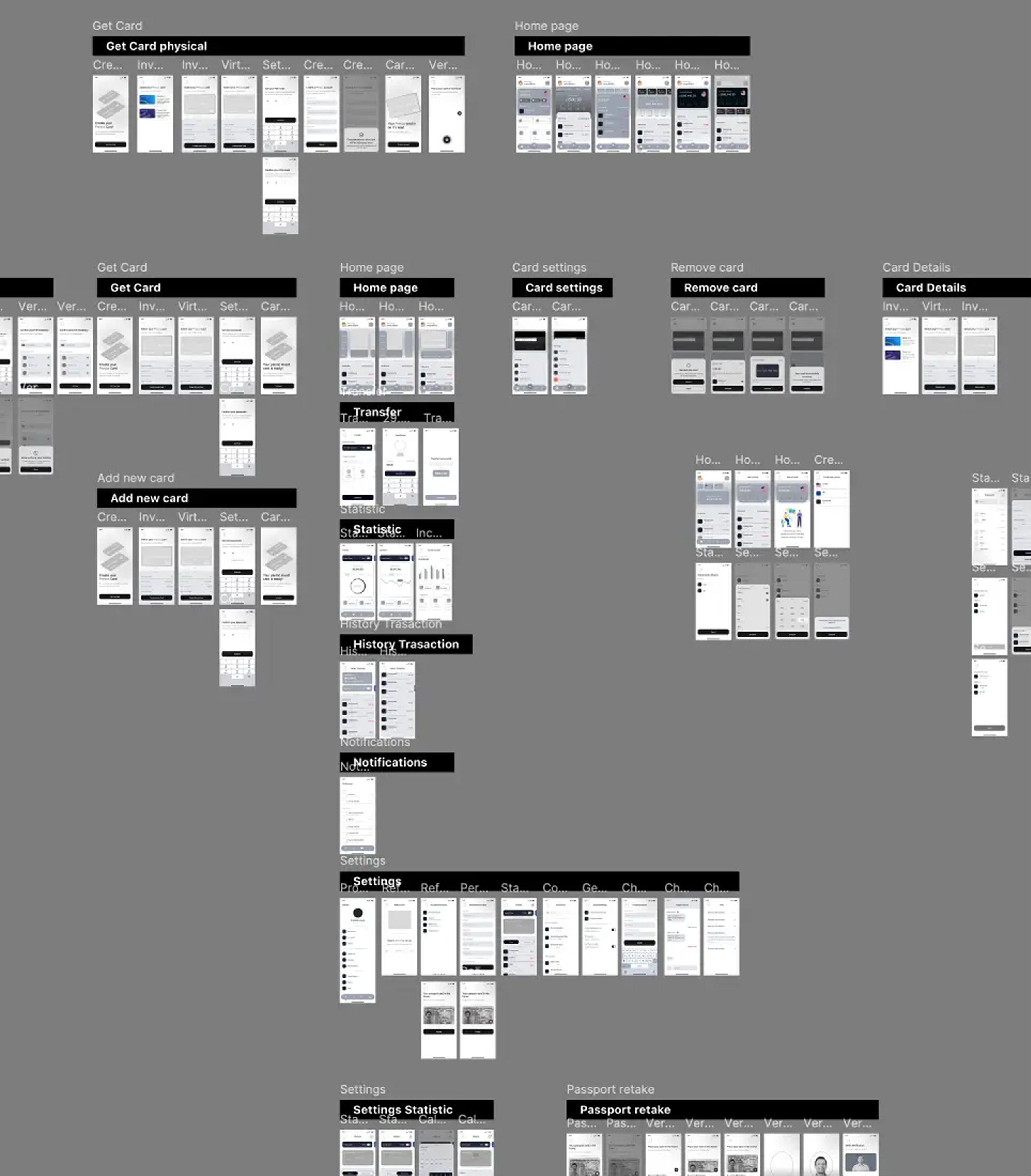
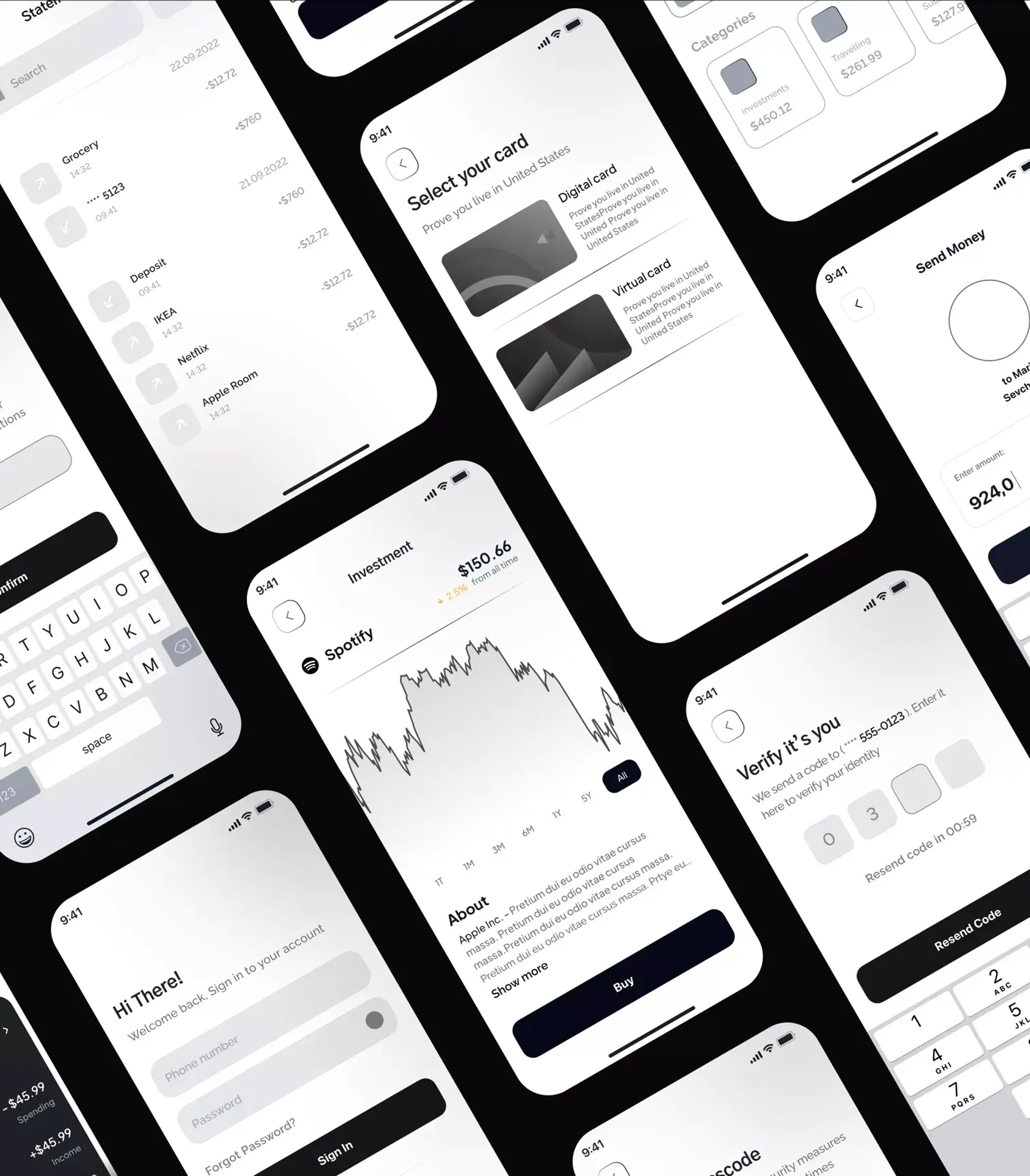
Every core flow was wireframed before any UI work started: onboarding, account overview, international payments, multi-currency management, savings goals — low-fidelity, no styling, no colour.

The wireframe stage was for arguing about structure: is this step necessary, does this action belong here, what happens in the empty state. A flow only moved to high fidelity once it held up in wireframes and got client sign-off.

This kept the visual design phase focused — by the time a screen was getting its final UI, the logic underneath it was already agreed.

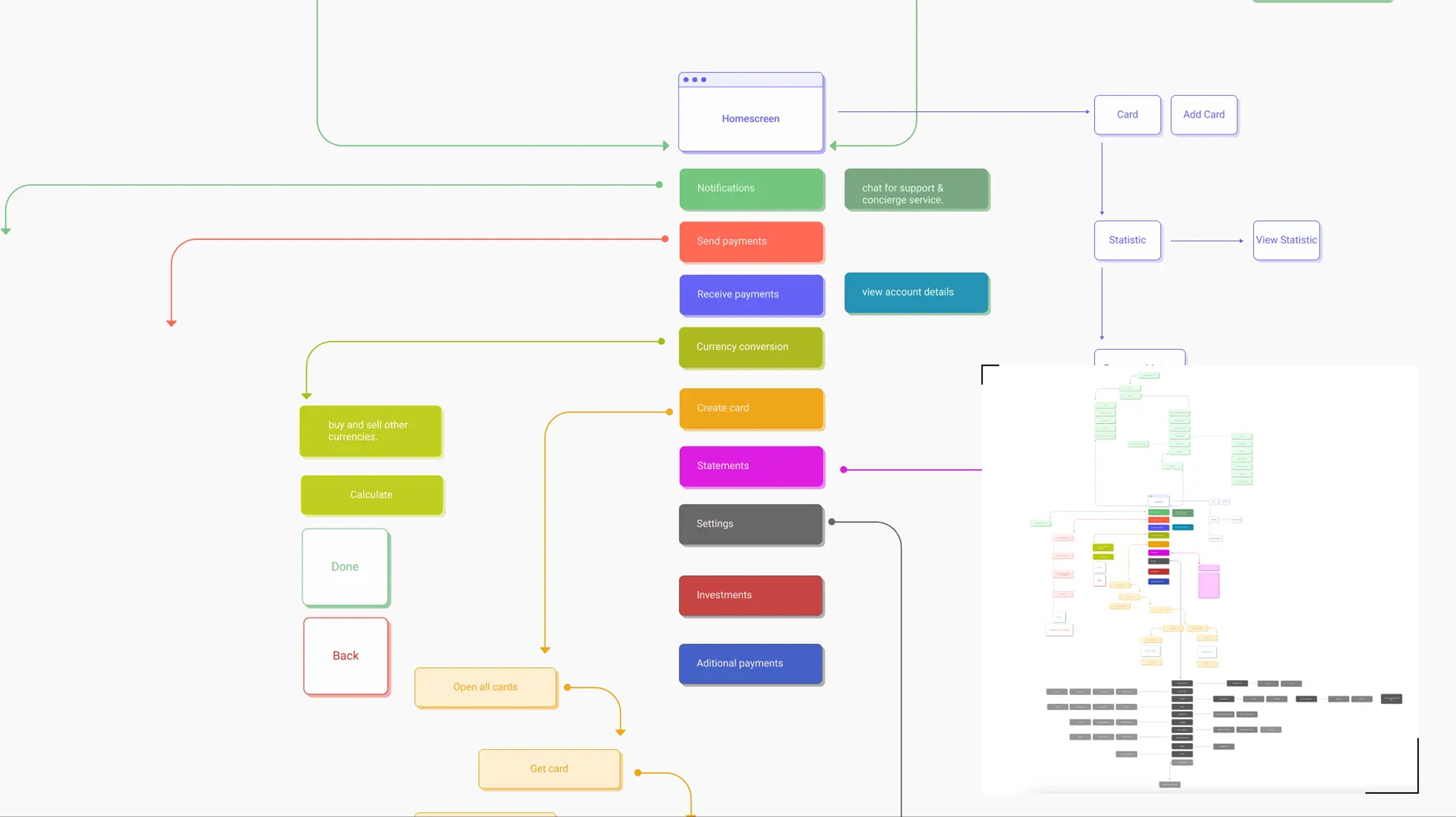
Neobank user flow diagram
Neobank wireframes overview
Neobank wireframes screens

Design system & UI Kit

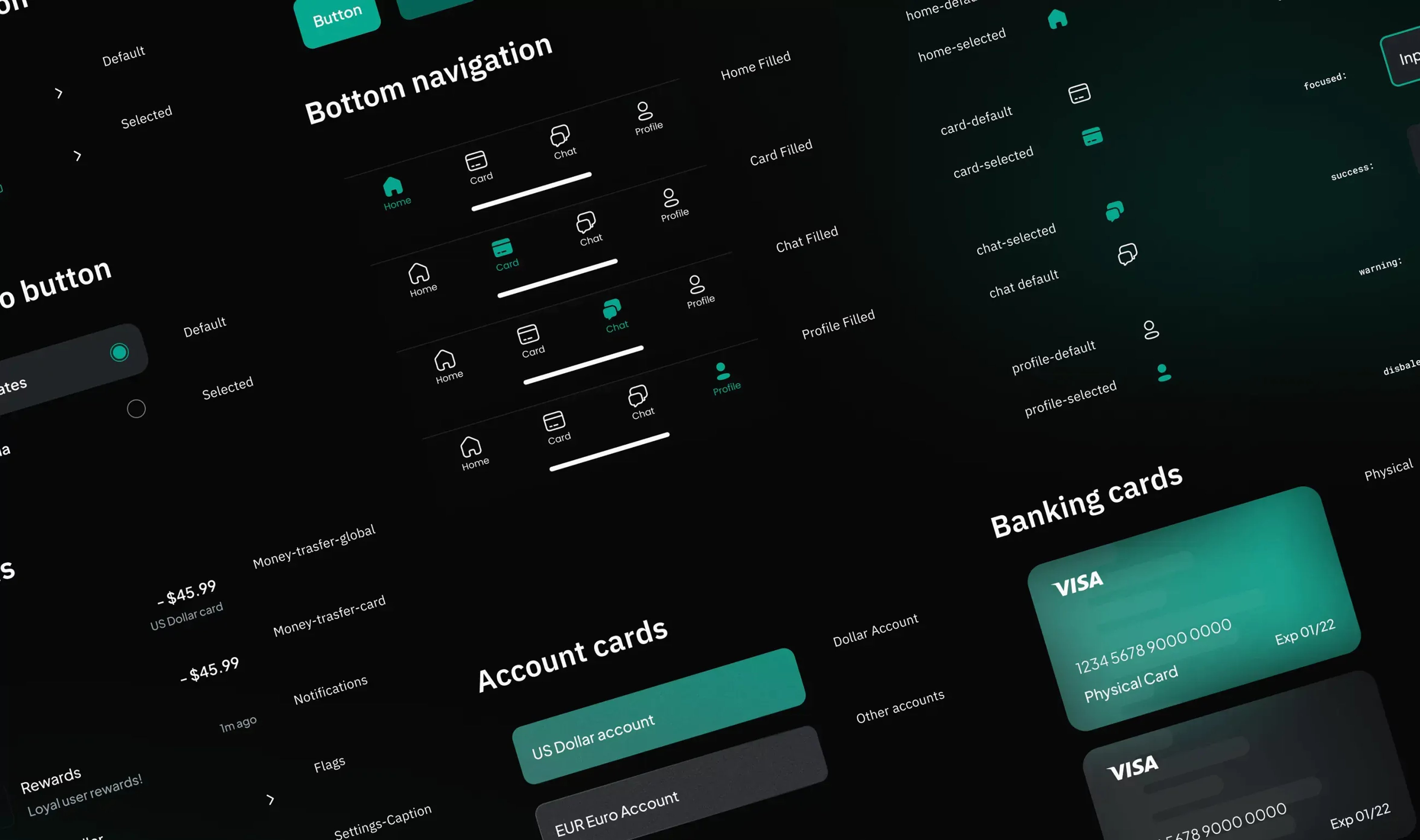
For a financial product, visual consistency isn't polish — it's trust. A button that looks different across two screens, a balance typeset two ways, quietly breaks the confidence the product needs to project.

I built the system from scratch: colours, typography, spacing, and a component library — all defined without a brand guideline, based on competitive analysis and what the product needed to communicate. Dark theme only, designed to feel premium and calm.

Every screen was assembled from the same kit. By the time flows were in high fidelity, there were no one-off decisions — just components doing their job.

Neobank design system — UI Kit with bottom navigation, banking cards, account cards, icons, components

Review

Without user testing budget, validation came from structured client review. Every flow was walked through as a task scenario — not a design presentation, but a simulation of real use.

Changes were small but cumulative: a confirmation step that added friction without clarity got cut, a balance card that buried the primary action got restructured, empty states got rewritten to suggest next steps. Each review tightened the product before a line of code was written.

Outcome

A complete iOS banking app shipped — CJM, wireframes, design system, and 40+ screens — designed solo from a blank canvas.

  • Solo end-to-end on a financial product where consistency and trust aren't nice-to-haves — they're the product.
  • Dark theme chosen over client's initial Revolut reference — argued on positioning, not aesthetics.
  • Full visual identity defined without a brand guideline: colour, typography, spacing — everything built from competitive analysis.
  • Design system delivered as Figma handoff — engineering team extended the product after delivery without design involvement.